
Diffuse knapweed
Centaurea diffusa Lam.
Description
Growing requirements
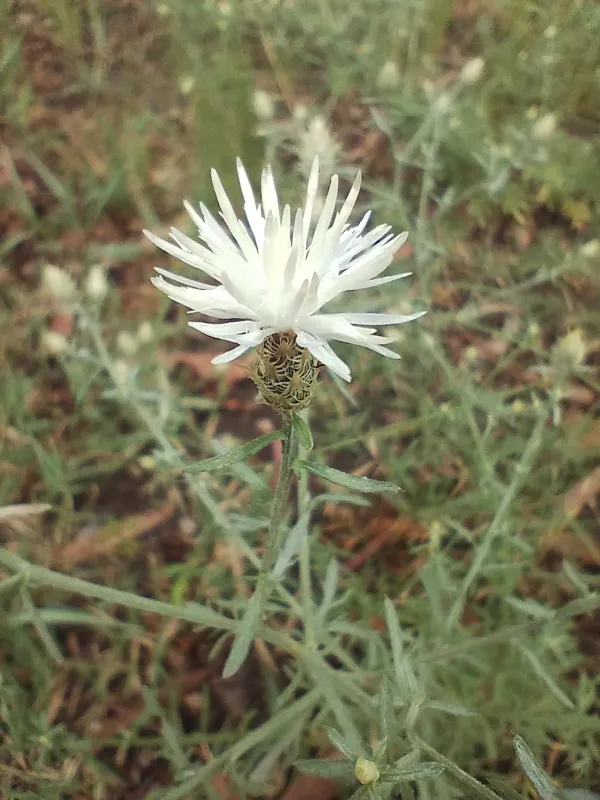
Diffuse knapweed is a biennial herbaceous plant belonging to the Asteraceae family. In the agricultural sector, it is recognized as a highly invasive weed that aggressively colonizes pastures, rangelands, and disturbed field margins.
The plant originates from the dry steppes of Southeastern Europe and Western Asia. It is well-adapted to arid climates and thrives in nutrient-poor, rocky, or gravelly soils where few other species can establish themselves successfully.
Botanically, it is characterized by a deep taproot and a branching stem that forms a tumbleweed structure upon maturity. This adaptation allows the plant to scatter its massive seed bank over large distances, facilitated by wind dispersal across open landscapes.
Knapweed has low requirements for moisture and nutrients but requires high levels of solar radiation. It exhibits allelopathic properties, releasing chemical compounds into the soil that inhibit the germination and growth of neighboring native or agricultural plant species.
Management strategies focus on preventing seed production. This includes timely mowing before the flowering stage, the application of selective herbicides, and the restoration of competitive plant communities to naturally suppress the establishment of new knapweed seedlings.
Main diseases and pests
Diffuse knapweed serves as a host for several pathogens, including various rust fungi and root-rotting organisms. These can occasionally spread to commercially cultivated crops, complicating the phytosanitary management of nearby fields.
Several insect species, including seed-head weevils and gall flies, are known to feed on the reproductive parts of the plant. These natural enemies are actively studied and introduced in certain regions as biological control agents to manage the knapweed population.