
Maltese star-thistle
Centaurea melitensis L.
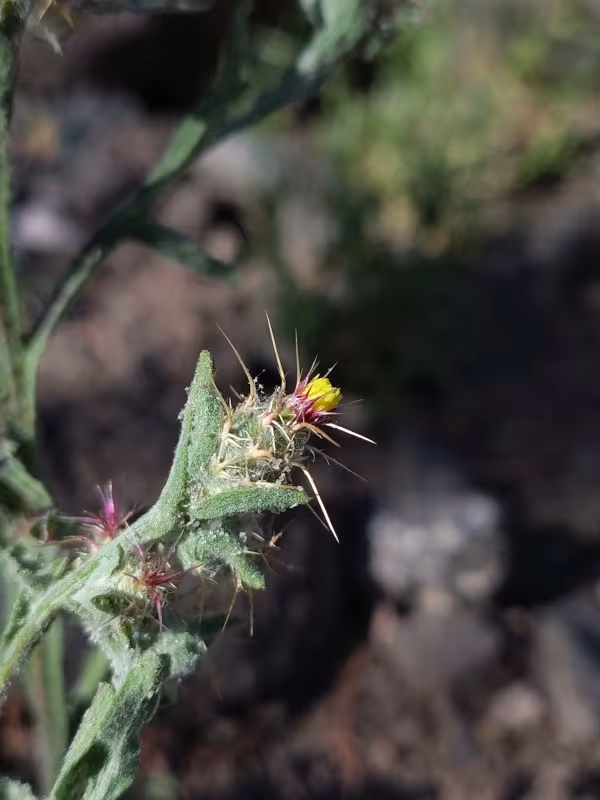
Description
Sowing dates
Maltese star-thistle is a winter annual that typically germinates during the late autumn or early winter months after the first seasonal rains.
Seedlings develop into a basal rosette during the winter, which allows the plant to establish a robust root system before the spring growth spurt.
In agricultural settings, the timing of germination coincides with the preparation and planting phases of many cool-season crops.
Seeds can remain viable in the soil for several years, creating a persistent seed bank that complicates long-term management strategies.
Effective control often requires pre-emergent interventions or early post-emergent herbicide applications while the plants are in the rosette stage.
Growing requirements
Originating from the Mediterranean region, this species thrives in open areas with high solar exposure and well-drained soil profiles.
It displays remarkable plasticity, capable of growing in diverse soil textures including rocky, sandy, and heavier clay compositions.
The plant is highly drought-tolerant, utilizing a deep taproot to access water resources that are unavailable to shallower-rooted crops.
It prefers climates with mild, wet winters and dry summers, which facilitate both rapid spring growth and efficient seed dispersal.
Due to its invasive nature in many non-native regions, it is often classified as a noxious weed that requires strict agricultural monitoring.
Main diseases and pests
While the species is hardy, it can be affected by various fungal pathogens and rusts that may hinder its biomass production under certain conditions.
Specific insect pests and seed-head weevils can cause significant damage to the reproductive organs, though these are often insufficient for total control.
The primary agricultural threat is its competitive behavior, which reduces crop yield and compromises the quality of forage for livestock.
Spiny bracts pose a mechanical hazard to grazing animals, leading to potential injuries and a significant reduction in the value of pastures.
Integrated weed management, involving both mechanical tilling and targeted chemical control, is essential to minimize its spread in farming landscapes.