
Greater knapweed
Centaurea scabiosa L.
Description
Sowing dates
Greater knapweed (Centaurea scabiosa L.) is a perennial herbaceous plant belonging to the Asteraceae family. Seeds are typically sown in late autumn or early spring when soil temperatures reach 5–8 degrees Celsius.
To ensure successful germination, the seeds require a stratification period of 30 to 45 days in cool conditions, mimicking natural winter dormancy. Optimal sowing depth is approximately 1 to 2 centimeters in well-tilled soil.
When spring-sown, the plants develop a basal rosette of leaves during the first year, focusing on root establishment. Proper spacing is essential to minimize competition and ensure maximum exposure to sunlight.
The plant demonstrates vigorous growth early on, but it is important to keep the site free of weeds during the initial stages to prevent choking of young seedlings.
Beyond seed propagation, the plant can also be increased through division of the rhizome from established mature clumps, a method often favored in nursery production.
Growing requirements
Greater knapweed thrives in full sun exposure. It is a heliophilous species that requires unobstructed sunlight to maintain its structural integrity and produce abundant flowers.
It performs best in calcareous, well-drained, and nutrient-rich soils. The plant shows a strong preference for neutral to slightly alkaline soil conditions typical of limestone grasslands.
The species is exceptionally drought-tolerant due to its deep taproot system, which allows it to access water reserves stored in lower soil horizons during dry spells.
Waterlogging is detrimental to this species; therefore, sites with heavy clay or poor drainage should be avoided to prevent root suffocation and decay.
It exhibits excellent cold hardiness, capable of surviving harsh winters without specific protection, making it an ideal candidate for temperate climate gardens and fields.
Yield
The primary agricultural interest in Centaurea scabiosa lies in its significant nectar production. It serves as an excellent forage source for honeybees during the mid-summer season.
Beekeepers value this species for its ability to provide a consistent nectar flow, which contributes to high-quality honey production in regions where the plant grows abundantly.
In the field of herbal medicine, the aerial parts of the plant are harvested for their therapeutic properties, including traditional use for anti-inflammatory and antiseptic purposes.
In landscaping, the plant is increasingly utilized in wildflower meadows and sustainable garden designs due to its architectural flower heads and ecological value to pollinators.
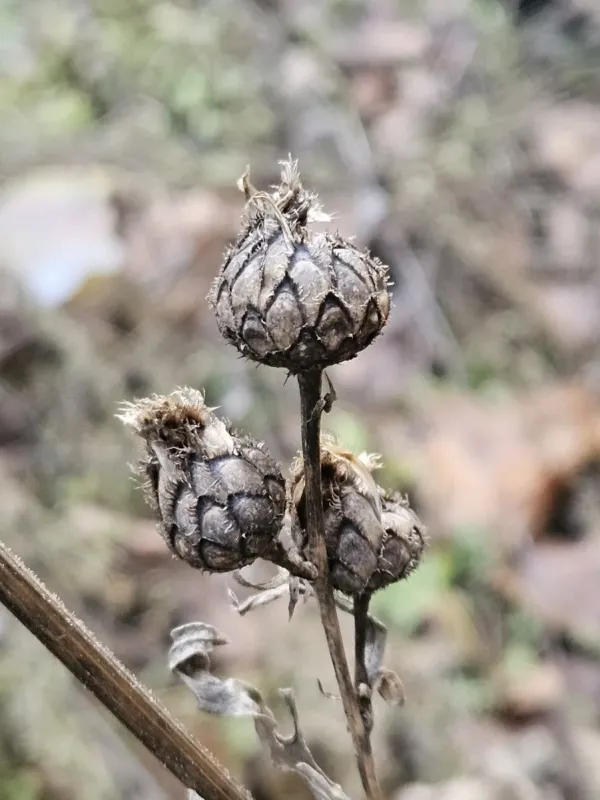
Seed harvesting is conducted when the flower heads fully dry out. Timely collection is crucial to prevent natural dispersal, as the seeds are equipped with bristles for wind transport.
Main diseases and pests
Aphids are the most frequent pests, often clustering on the buds and stems, which can sap the plant's vigor and reduce the duration of the flowering period.
Powdery mildew represents a common fungal threat, particularly in dense stands with poor air circulation or during periods of high atmospheric humidity.
Root damage from soil-dwelling larvae, such as wireworms, can undermine plant health, leading to premature wilting and patches of stunted growth in the field.
Leaf rust can occur in environments with persistent wetness, manifesting as characteristic pustules on the undersides of leaves and requiring quick sanitation measures.
Good agricultural practice, including adequate plant spacing and strict adherence to rotation cycles, remains the best defense against recurring biological threats.