
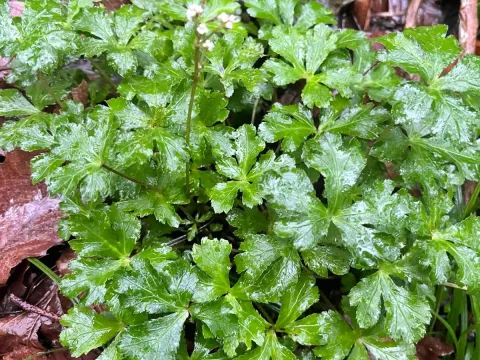
Sanicula
Sanicula
Sanicula is typically propagated through seeds or division of mature rootstocks. Seeds often require a period of cold stratification, making late autumn the ideal time for direct sowing outdoors to allow natural winter chill to break dormancy.
What the section contains
 Bear's-foot sanicle
Sanicula arctopoides
Bear's-foot sanicle
Sanicula arctopoides
 Canadian black snakeroot
Sanicula canadensis
Canadian black snakeroot
Sanicula canadensis
 Coast sanicle
Sanicula laciniata
Coast sanicle
Sanicula laciniata
 Hacquetia epipactis
Sanicula epipactis
Hacquetia epipactis
Sanicula epipactis
 Hawaiian sanicle
Sanicula sandwicensis
Hawaiian sanicle
Sanicula sandwicensis
 Purple Sanicle
Sanicula purpurea
Purple Sanicle
Sanicula purpurea
 Purple Sanicle
Sanicula bipinnata
Purple Sanicle
Sanicula bipinnata
 Purple sanicle
Sanicula bipinnatifida
Purple sanicle
Sanicula bipinnatifida
 Red-flowered sanicle
Sanicula rubriflora
Red-flowered sanicle
Sanicula rubriflora
 Sanicle
Sanicula europaea
Sanicle
Sanicula europaea
 Sanicula azorica
Sanicula azorica
Sanicula azorica
 Sanicula chinensis
Sanicula chinensis
Sanicula chinensis
 Sanicula crassicaulis
Sanicula crassicaulis
Sanicula crassicaulis
 Sanicula graveolens
Sanicula graveolens
Sanicula graveolens
 Sanicula marilandica
Sanicula marilandica
Sanicula marilandica
 Sanicula maritima
Sanicula maritima
Sanicula maritima
 Sanicula odorata
Sanicula odorata
Sanicula odorata
 Sanicula saxatilis
Sanicula saxatilis
Sanicula saxatilis
 Sanicula tracyi
Sanicula tracyi
Sanicula tracyi
 Sanicula trifoliata
Sanicula tuberculata
Sanicula tuberculata
Sanicula trifoliata
Sanicula trifoliata
Sanicula tuberculata
Sanicula tuberculata
 Sharp sanicle
Sanicula arguta
Sharp sanicle
Sanicula arguta
 Small's sanicle
Sanicula smallii
Small's sanicle
Sanicula smallii
Sanicula
For spring sowing, seeds must be pre-chilled in a refrigerator for several weeks to mimic seasonal changes. Sowing should be shallow, as the seeds need minimal covering with a light, airy soil medium to thrive.
Division of existing clumps is best performed in early spring as new growth starts, or in late summer after the plant has finished flowering. This method ensures faster establishment compared to seed propagation.
When planting, provide sufficient spacing of about 30–40 cm between individuals to ensure good airflow. Seedlings are slow to grow initially, requiring diligent weeding to prevent the plants from being smothered by aggressive weeds.
Use fresh seeds whenever possible, as their viability decreases significantly over time. Once established, the plants are quite reliable and can persist in favorable woodland conditions for many years.
As a member of the Apiaceae family, Sanicula is naturally adapted to woodland environments with dappled sunlight. It thrives in locations that offer partial to full shade, avoiding the harsh direct midday sun.
The ideal soil is rich in organic matter, loose, and consistently moist but well-draining. Heavy, waterlogged soils should be amended with organic compost and leaf mold to improve structure and aeration for the root system.
Sanicula prefers soil with a neutral to slightly acidic pH. Incorporating decomposing organic mulch around the base of the plant helps maintain soil temperature and moisture, mirroring its native habitat.
This genus is highly frost-hardy and requires little protection during the winter months in temperate climates. However, in regions with very cold winters, a light layer of mulch can provide extra insulation for young plants.
Regular watering is essential during dry spells, especially during the active growing season. The plant's health is quickly compromised if the soil dries out completely for extended periods, leading to stunted leaf growth.
The agricultural value of Sanicula lies in its medicinal foliage, which is harvested during the peak blooming period. At this stage, the concentration of secondary metabolites is at its highest, providing the best quality for drying.
Productivity peaks in the second or third year after establishment. Proper soil fertility and consistent moisture are the most significant factors in maximizing the biomass yield per square meter of cultivated land.
Harvesting should be done by carefully trimming the stems with clean, sharp shears, leaving enough foliage for the plant to recover and photosynthesize for the remainder of the season.
After harvesting, the foliage must be dried in a well-ventilated, shaded area to preserve its color and essential constituents. Direct sunlight must be avoided to prevent the degradation of volatile compounds within the leaves.
Properly cured and stored in airtight containers, the dried material retains its efficacy for up to two years. Consistent harvesting methods ensure the longevity of the plant beds and continued output over several years.
Sanicula is generally resistant to many common pests, but it can be susceptible to powdery mildew when planted in areas with poor air circulation. Thinning out overcrowded plants is an effective preventive measure.
Root rot is a major threat in poorly drained or overly saturated soils. Ensuring excellent drainage through soil amendments is the most effective way to avoid this problem and maintain a healthy root zone.
Slugs and snails are the most common pests, particularly during wet seasons, as they feed on tender new foliage. Using physical barriers such as copper tape or crushed shells can help protect the young plants.
Aphids might occasionally colonize the underside of leaves during the early growing season. In most cases, a strong jet of water or the introduction of beneficial insects is sufficient to manage these populations.
Occasional fungal leaf spots may occur in very humid conditions. Regular monitoring allows for the early removal of infected leaves, preventing the spread of spores to healthy parts of the crop.