
Purple sanicle
Sanicula bipinnatifida
Description
Growing requirements
Purple sanicle (Sanicula bipinnatifida) is a perennial herb belonging to the Apiaceae family. It is native to the western regions of North America, where it thrives in open woodlands, grassy slopes, and meadow habitats, demonstrating a strong ability to adapt to varying light conditions.
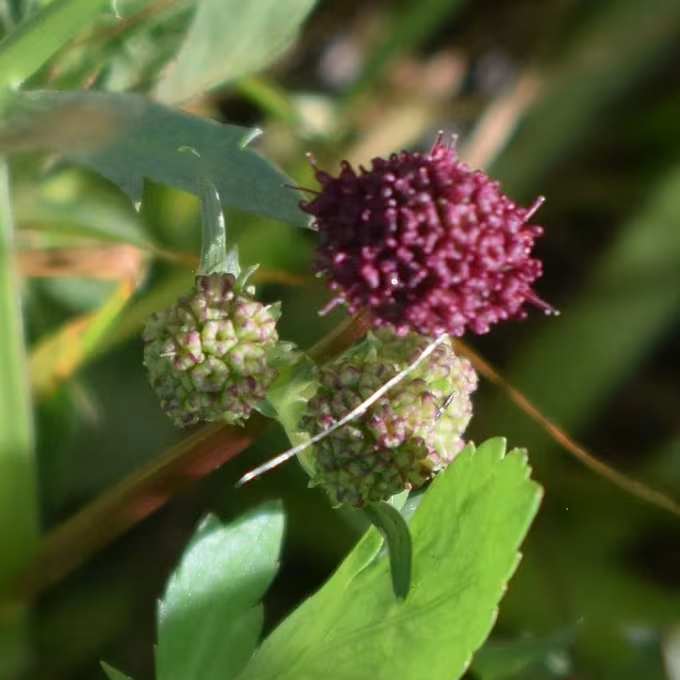
The plant is easily identified by its basal rosette of deeply dissected, pinnatifid leaves. As a member of the carrot family, it produces characteristic compound umbels of flowers, usually appearing in shades of purple or dark red, which distinguishes it from many other yellow-flowered sanicle species.
Regarding soil requirements, this species favors well-drained substrates that mimic its natural rocky or gravelly soil environments. While it can handle periods of seasonal drought, maintaining consistent moisture during its active growing phase in the spring is crucial for optimal vegetative development.
Cultivation practices should prioritize a site with partial shade to replicate the light levels of open forest floors. Avoiding heavy, clay-rich soils is essential to prevent root rot, as the species relies on good gas exchange within the rhizosphere to maintain its vigor throughout the dormant season.
While not a traditional broad-acre crop, purple sanicle has potential applications in ecological restoration and native plant landscaping. Its botanical uniqueness and role in supporting local pollinators make it a valuable candidate for niche agricultural projects focused on biodiversity and local flora conservation.