
Sanicula marilandica
Sanicula marilandica
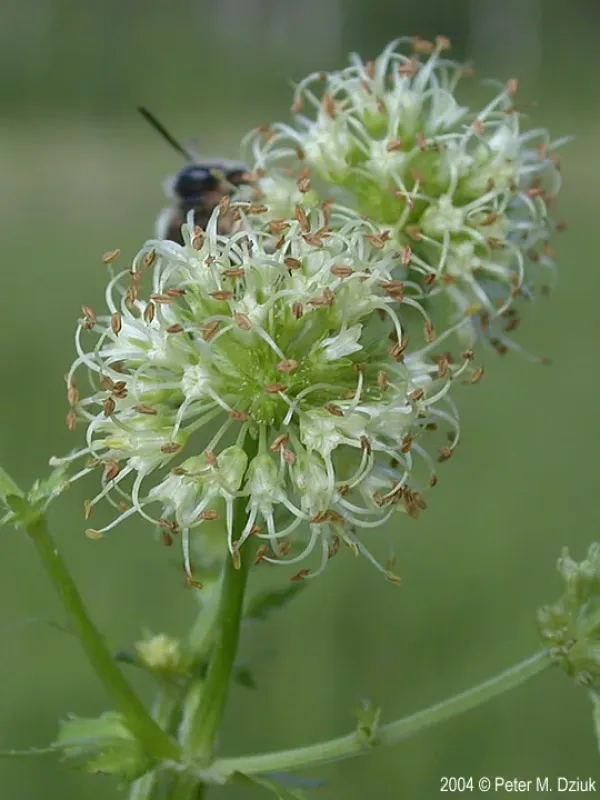
Description
Sowing dates
Sanicula marilandica seeds require a period of cold stratification to break dormancy. Sowing in late autumn allows the natural winter temperatures to prepare seeds for spring germination.
The seeds should be sown shallowly, ideally covered by a very thin layer of fine soil or compost. Space the seeds out evenly to avoid overcrowding as they establish their root systems.
If sowing in the spring, ensure seeds are stratified in a refrigerated environment (around 4°C) for several weeks before planting to simulate winter conditions.
Optimal germination occurs in moist, cool soil. Once seedlings reach a height of 5-8 centimeters, they can be thinned to ensure adequate spacing for mature growth.
Choose a site with consistent moisture levels for sowing. The area should be prepared by removing all perennial weeds, as the slow-growing seedlings are easily outcompeted early on.
Growing requirements
Sanicula marilandica belongs to the Apiaceae family and is commonly known as Black Snakeroot. It thrives in temperate forest environments, preferring cool and shaded conditions.
The soil should be rich in organic matter, moist, and well-drained. It does not tolerate prolonged waterlogging, although it prefers higher soil moisture than most garden herbs.
Partial shade is essential for this species. Providing shelter from direct midday sun prevents leaf scorch and helps maintain the high moisture content required for growth.
It is a highly winter-hardy perennial. In its native North American range, it survives harsh winters without any artificial protection, making it a low-maintenance crop.
Maintaining a neutral to slightly acidic pH is ideal. Adding a layer of organic mulch can help retain soil moisture and mimic the natural forest floor habitat.
Yield
The harvestable yield of Sanicula marilandica consists mainly of its aerial parts, harvested during the flowering stage for medicinal and botanical purposes.
Yield stability depends on maintaining a consistent environment. Regular irrigation during dry summer spells is vital for maximizing the production of biomass.
While not a high-intensity crop, established stands can be productive for many years. Proper thinning and weed management are key to maintaining high-quality harvests.
By the third year, the plant typically reaches full maturity, providing the highest concentration of phytochemicals in its leaves and stems.
Sustainable harvesting practices, such as leaving a portion of each plant uncut, ensure the long-term viability and health of the perennial stand.
Main diseases and pests
Fungal diseases are the primary threat, particularly in environments with poor air circulation or excessive overhead moisture during the growing season.
Aphids and mites can occasionally target the foliage. Integrated pest management, focusing on biological controls, is recommended to preserve the quality of medicinal plant parts.
Root rot caused by pathogens in poorly drained soil can decimate entire patches. Always ensure soil structure allows for proper water percolation.
Competition from aggressive invasive weeds can suppress growth significantly in the first two years of a stand's life cycle.
Monitoring for signs of leaf spots is essential, as these can quickly spread if humidity levels remain high for extended periods during the summer.
Harvesting
The best time to harvest is during peak flowering, when the plant's metabolic activity is concentrated in the stems and leaves, enhancing its chemical profile.
Harvesting should be performed early in the day, after the dew has evaporated but before the heat of the day reaches its peak, to preserve essential compounds.
After cutting, the plant material should be dried immediately in a dark, well-ventilated space to prevent fermentation or degradation by sunlight.
Proper drying is achieved at low temperatures (below 40°C). Overheating during the drying process will result in a significant loss of potency and quality.
Store the dried product in airtight containers in a cool, dark environment to ensure a long shelf life and retain the integrity of the harvested material.