
Coast sanicle
Sanicula laciniata
Description
Growing requirements
Coast sanicle (Sanicula laciniata) is a member of the Apiaceae family, native to the coastal and mountain regions of California. This perennial herb is highly valued for its unique foliage and its role in maintaining biodiversity within its native ecosystem.
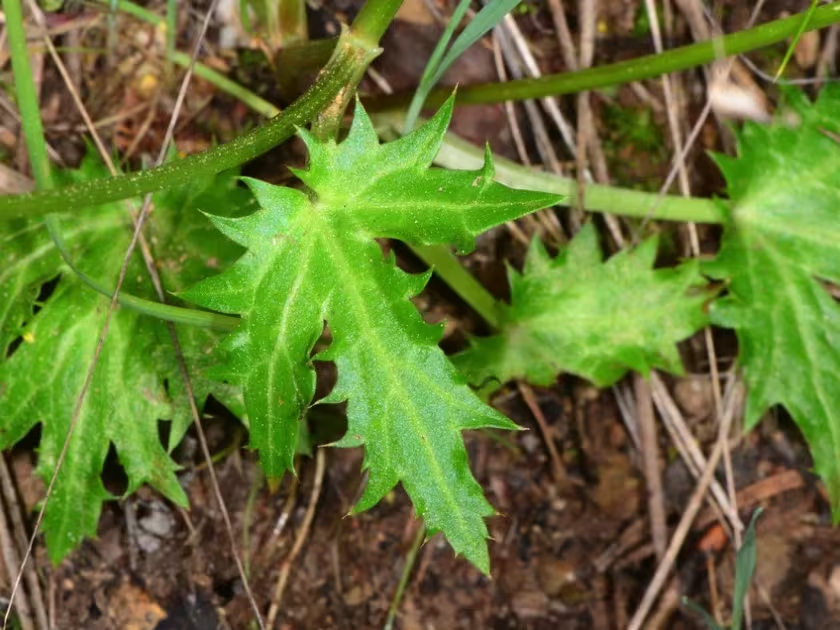
The plant features a basal rosette of deeply lobed, laciniate leaves, which gives it its specific botanical name. The flowering stems arise in late spring, producing spherical heads of small, yellow or greenish-yellow flowers typical of the genus.
Regarding cultivation, this species thrives in well-drained, porous soils that mimic the rocky slopes of its natural habitat. It prefers sites with partial shade or filtered sunlight, which helps prevent leaf scorch and dehydration during hot summer months.
Soil pH should ideally be neutral to slightly acidic. In an agricultural setting, it is important to provide sufficient organic matter to support growth, while avoiding heavy, waterlogged conditions that can cause root dieback.
While not a major commercial agricultural crop, Sanicula laciniata is used in ecological restoration and native plant landscaping. Its low water requirements once established make it an excellent choice for low-maintenance garden design.
Main diseases and pests
The primary threats to Sanicula laciniata are fungal pathogens associated with excess moisture. Poor soil drainage is the leading cause of plant mortality, particularly during the transition from the rainy season to the warmer dry season.
Insects like aphids and spider mites can occasionally affect the plant in greenhouse or garden settings. Monitoring the underside of the leaves is crucial for early detection, and integrated pest management practices are recommended to maintain plant health.