
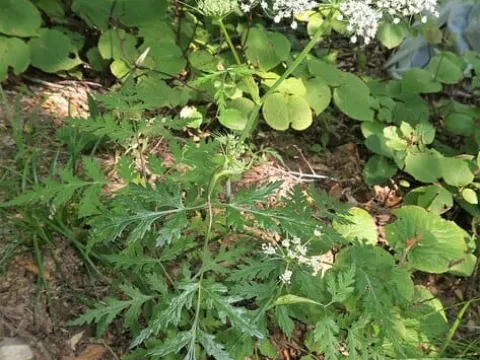
Saposhnikovia divaricata
Saposhnikovia
Saposhnikovia divaricata, a member of the Apiaceae family, is a highly valued medicinal plant. Seeds are typically sown in late autumn or early spring once soil temperatures reach 5-8 degrees Celsius.
What the section contains

Saposhnikovia divaricata
For optimal germination, seeds may require stratification to break dormancy. Spring sowing should be preceded by soaking or priming to ensure more uniform emergence of seedlings across the field.
The seeds should be planted at a depth of 1.5–2 centimeters. Row spacing should be maintained between 45–60 centimeters to provide adequate space for the plants to form robust rosettes.
Sites must be well-lit and protected from excessive wind. Proper field preparation is essential, as the soil must be weed-free and loosened to a significant depth for the taproot to grow straight.
The planting density should be calibrated to support approximately 150,000 to 200,000 plants per hectare, ensuring that each plant has enough nutrients for maximum root development.
This crop thrives in loose, sandy loam or light loam soils with a neutral pH. Compact or heavy clay soils hinder root penetration and can lead to malformed, low-quality roots.
The plant is known for its cold hardiness and drought tolerance, making it suitable for a variety of temperate climates. However, moderate watering is necessary during active growth phases.
Optimal temperatures for development range from +18 to +25 degrees Celsius. While it handles heat well, moisture levels must be monitored to prevent the plant from going into premature dormancy.
Fertilization should be balanced, focusing on phosphorous and potassium. Excess nitrogen can encourage leafy growth at the expense of the main root, which is the primary marketable part of the plant.
Adequate drainage is critical, as waterlogged conditions quickly lead to root rot and other fungal diseases, significantly reducing the yield and quality of the harvested crop.
Saposhnikovia is primarily cultivated for its roots, known in traditional medicine as Fangfeng. The harvest typically occurs after two or three years of growth to ensure maturity.
Yields of dry roots generally range from 1.5 to 3 tons per hectare, depending on soil fertility, moisture availability, and the specific cultivation practices employed during the season.
Commercial value is dictated by root size, straightness, and aroma. High-quality roots are clean, thick, and free from internal decay, fetching a premium price in pharmaceutical markets.
Post-harvest processing, including cleaning and controlled drying at temperatures below 60 degrees Celsius, is vital to preserve the essential oils and bioactive compounds within the tissues.
Due to the growing global interest in traditional herbal medicine, farming this species has become an increasingly lucrative venture for specialized medicinal herb producers.
The crop is vulnerable to soil-borne pests such as wireworms, which can cause significant damage to the taproot, lowering the overall quality of the medical raw material.
Root rot caused by Fusarium or Rhizoctonia is a major threat, especially in humid conditions or poorly drained fields. Crop rotation is the most effective preventative measure.
Weed management is critical, particularly during the first year of establishment. Weeds compete for nutrients and light, often stunting the development of the young, sensitive plants.
Fungal leaf diseases may appear if air circulation is poor or humidity levels are consistently high. Regular inspection and targeted treatment are necessary for maintaining crop health.
- Strict adherence to crop rotation
- Use of disease-free planting material
- Monitoring for soil pests
- Maintaining proper field hygiene
Harvesting is conducted in autumn when the foliage starts to turn yellow and die back. This signals that the plant has stored maximum energy in its root system.
Mechanical digging is the standard method for harvest, using specialized equipment to extract the roots carefully to prevent mechanical damage or breakage of the valuable taproots.
Immediately after digging, roots must be washed to remove all soil residues. Side rootlets and damaged parts are trimmed to meet industry quality standards for packaging.
Drying is performed in climate-controlled facilities to prevent mold growth. Once fully dried, the product is sorted into size fractions for sale or further processing into powders or extracts.
Storing the finished dry product requires cool, dark, and dry conditions to ensure that the potency of the medicinal constituents is maintained during the transit and shelf-life period.