
Hawaiian sanicle
Sanicula sandwicensis
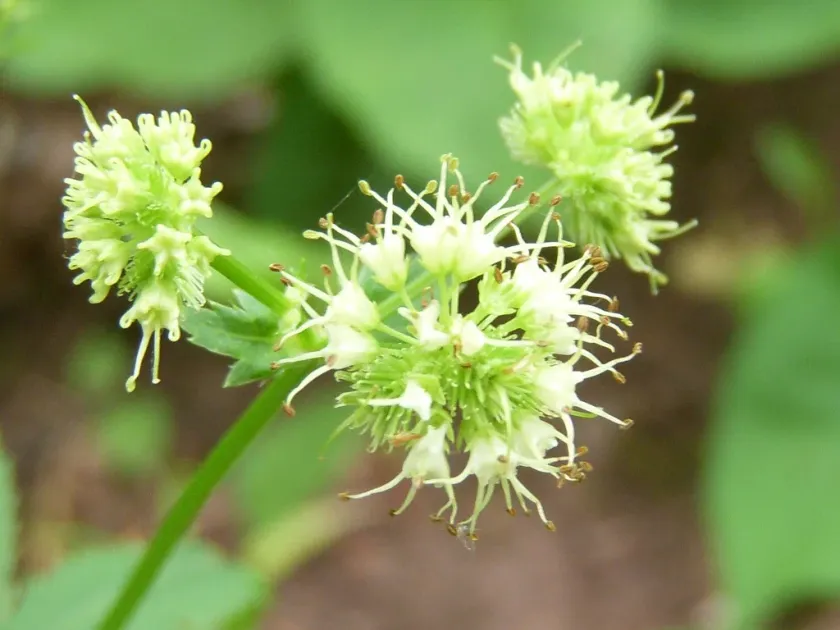
Description
Growing requirements
The Hawaiian sanicle (Sanicula sandwicensis) is a unique member of the Apiaceae family, endemic to the Hawaiian Islands. It is a perennial herbaceous plant that is naturally found primarily in high-elevation areas, including subalpine zones.
This species thrives in specific ecological conditions typical of volcanic landscapes. Optimal growth occurs in well-drained soils rich in organic matter, which have developed over basaltic parent material.
Climate requirements for the plant include moderate temperatures with distinct diurnal temperature fluctuations, common in the highland regions of Hawaii. The plant requires adequate moisture but is extremely sensitive to waterlogging in the root zone.
In its native range, the sanicle is adapted to high levels of solar radiation and open spaces. It often grows in association with other high-altitude vegetation, forming specialized communities that are resilient to strong winds.
Due to its status as a rare and protected species, the Hawaiian sanicle is not considered an agricultural crop. Research into this plant is essential for preserving biodiversity and understanding plant adaptation processes within the context of island isolation.