
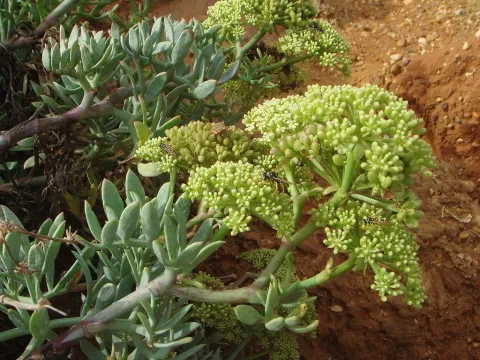
Rock samphire
Crithmum
The sowing of Rock samphire seeds is ideally performed in early spring, once the danger of frost has passed and the soil has reached a stable temperature.
What the section contains

Rock samphire
Since the seeds have a naturally hard coat, they require pre-sowing treatments such as stratification or soaking in water to improve the germination rate significantly.
In a controlled environment, seeds should be sown in seedling trays using a well-draining, sandy substrate to ensure they do not rot during the initial stages.
When transplanting seedlings into the field, it is crucial to space them roughly 30–40 centimeters apart to prevent overcrowding and fungal infections.
Proper depth for sowing is shallow, as the seeds need a small amount of light to trigger their germination process effectively.
Rock samphire, known botanically as Crithmum maritimum, belongs to the Apiaceae family and is a robust halophyte native to rocky coastal cliffs.
This plant thrives in full sun, requiring exposure to direct light for the majority of the day to produce its signature aromatic profile and essential oils.
The soil must be light, rocky, and exceptionally well-drained; the plant naturally adapts to saline conditions, so it can tolerate soils that would kill most other crops.
It has an innate ability to withstand harsh coastal winds and sea spray, making it a sustainable choice for high-exposure agricultural landscapes.
Temperature-wise, the plant prefers moderate climates but remains highly resilient to both heat and periods of temporary water scarcity due to its waxy leaves.
The yield of Rock samphire is determined by the regularity of harvesting, which encourages the plant to produce new, tender vegetative growth throughout the season.
With proper management, a farmer can expect a consistent supply of leaves and young stems throughout the summer months, yielding several kilograms per square meter.
While the plant is hardy, modest fertilization can increase biomass, but excessive nitrogen should be avoided as it dilutes the potent aromatic quality of the herb.
Mature plants, usually in their third year, provide the highest volume of harvestable material while maintaining robust health and productivity.
Strategic pruning during harvest periods helps maintain the desired plant structure and prevents the plant from becoming overly woody and unpalatable.
The most significant threat to Rock samphire is waterlogged soil, which quickly leads to root rot and the loss of the entire plant within a very short time frame.
In greenhouses or humid environments, powdery mildew can become a concern if air circulation is insufficient around the foliage of the plants.
Aphids are the primary pests that tend to infest the soft tips of the plants, requiring regular inspection and early intervention to prevent stunted growth.
Snails and slugs can cause damage to younger plants, so protective barriers or gravel mulching are recommended to keep these pests away from the edible parts.
Effective pest control strategies focus on maintaining clean, airy conditions and utilizing biological controls rather than harsh chemical sprays.
Harvesting usually takes place from late spring through early autumn, focusing on the fresh, young leaves and tender flowering stems before they harden.
Sharp garden shears should be used to trim the outer leaves, which ensures that the inner growth point remains intact for future production cycles.
Since harvested samphire wilts rapidly, immediate processing or storage in a cool, humid environment is necessary to preserve its texture and flavor.
Many producers harvest the succulent flower buds, which are highly prized in culinary circles for pickling as a luxury condiment.
Post-harvest care involves keeping the product in refrigerated conditions at approximately +2 to +4 degrees Celsius to maintain shelf life and freshness.