
Sanicle
Sanicula europaea
Description
Growing requirements
Sanicle (Sanicula europaea) is a perennial herbaceous plant belonging to the Apiaceae family. It is natively found in deciduous forests across Europe and Western Asia, where it thrives in shaded, cool, and moist forest floors, often under dense tree canopy.
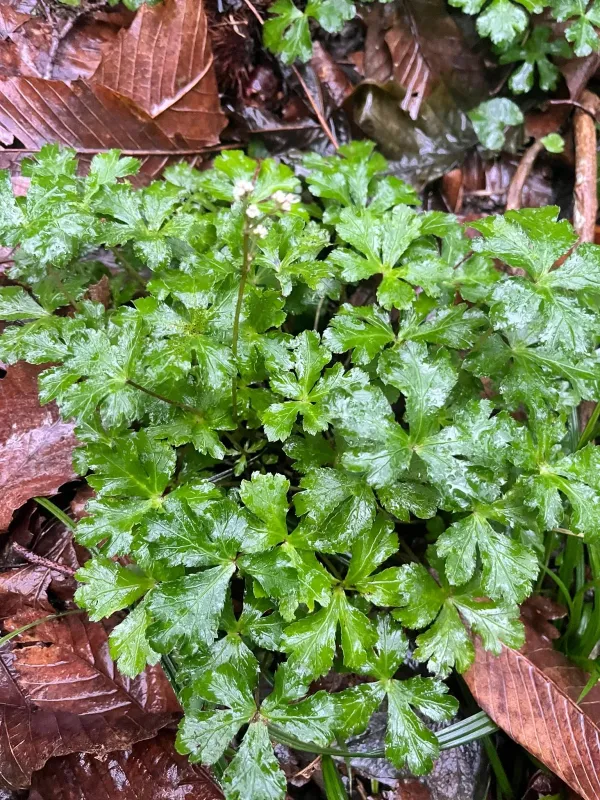
The plant is characterized by a basal rosette of glossy, palmately lobed leaves and a slender, upright stem that holds dense, globose clusters of small white or pinkish flowers. It typically reaches heights between 30 and 60 centimeters during the flowering period.
For successful cultivation, Sanicle requires soil that is rich in organic matter, slightly moist, and well-drained. A pH level ranging from neutral to slightly acidic is ideal to mimic the natural woodland environment where it flourishes.
As a woodland plant, it performs best in partial to full shade. Exposure to intense afternoon sun can scorch the leaves and significantly reduce the quality of the foliage, which is often harvested for its medicinal properties.
Economically, Sanicle is recognized in traditional herbal medicine. It is highly valued for its astringent and wound-healing properties, and historically, it has been used to treat respiratory conditions and inflammatory issues in various European folk practices.
Main diseases and pests
Fungal issues, particularly powdery mildew, are the primary disease threats, especially in areas with poor air circulation or excessive humidity. Ensuring adequate spacing between plants is critical for preventing these outbreaks.
Root rot remains a major concern for growers, usually resulting from soil compaction or poor drainage. Improving soil texture with organic amendments helps maintain the health of the root system and prevents moisture-related pathogens from taking hold.
Slugs and snails are notorious for feeding on the tender leaves of the Sanicle, especially during wet springs. Gardeners often use physical barriers like copper tape or gravel mulch to protect the plants from these mollusks.
Aphids can occasionally cluster on the inflorescences, sucking sap and weakening the plant. Biological control methods, such as encouraging ladybugs, are typically sufficient to keep aphid populations below the threshold of economic damage.
General plant health is maintained through regular inspection and the removal of dying or diseased tissues. Avoiding the use of harsh chemical pesticides ensures that the harvested leaves retain their purity and intended medicinal efficacy.