
Purple Sanicle
Sanicula purpurea
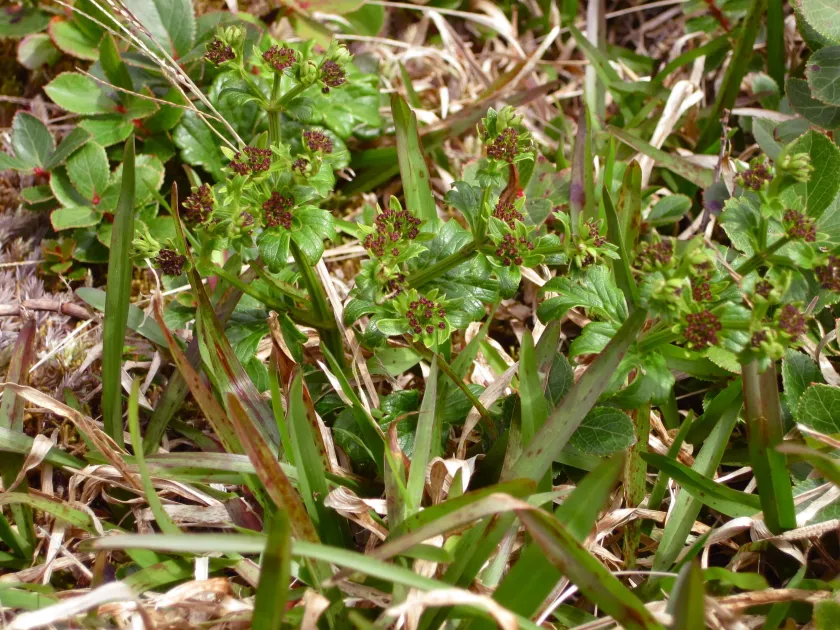
Description
Growing requirements
Purple Sanicle (Sanicula purpurea) is a perennial herbaceous plant belonging to the Apiaceae family. It is typically found in shaded forest habitats, thriving in environments that provide consistent moisture and protection from harsh weather conditions.
The plant is botanically characterized by its basal leaf rosette and distinct, purple-hued flower heads. This visual trait sets it apart from many of its relatives in the genus, which are commonly known for cream or yellow-colored blooms.
Growth requirements emphasize the need for rich, slightly acidic loam soils with excellent drainage. Purple Sanicle performs best when situated in partial to full shade, avoiding direct, intense sunlight which can scorch the foliage and dry out the root system.
Agrotechnical management is specialized, focusing on maintaining steady soil moisture and preventing root competition. It is not considered a mass-market crop but is often cultivated in specialized botanical gardens or nursery settings focused on medicinal flora.
The species requires a cool, temperate climate to complete its life cycle effectively. High summer temperatures are generally detrimental, often forcing the plant into premature dormancy if environmental stresses are not properly mitigated by irrigation or shielding.
Main diseases and pests
The primary threats to Sanicula purpurea in cultivation are soil-borne pathogens, specifically root rot fungi that proliferate in waterlogged conditions. Proper soil aeration is essential to prevent these issues from developing during the wetter months of the year.
Common pests include aphids and various leaf-feeding larvae that can damage the delicate foliage. Integrated pest management, focusing on early detection and the use of insecticidal soaps or natural predators, is recommended for maintaining plant health.