
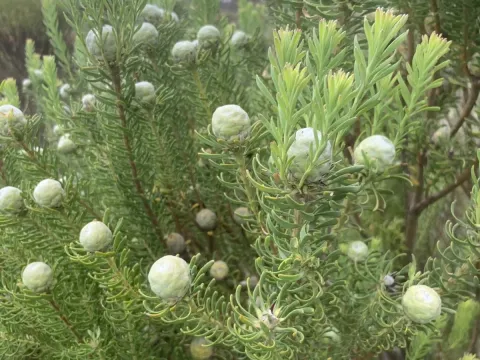
Leucadendron
Leucadendron
Propagation of Leucadendron is typically achieved through seeds or semi-hardwood cuttings. Seeds should be sown in a well-draining, acidic substrate to mimic their natural habitat and prevent rot.
What the section contains
 Leucadendron coniferum
Leucadendron coniferum
Leucadendron coniferum
 Leucadendron ericifolium
Leucadendron ericifolium
Leucadendron ericifolium
 Leucadendron galpinii
Leucadendron galpinii
Leucadendron galpinii
 Leucadendron hybrid
s
Leucadendron hybrid
Leucadendron hybrids
 Leucadendron laxum
Leucadendron laxum
Leucadendron laxum
 Leucadendron linifolium
Leucadendron linifolium
Leucadendron linifolium
 Leucadendron loranthifolium
Leucadendron loranthifolium
Leucadendron loranthifolium
 Leucadendron nervosum
Leucadendron nervosum
Leucadendron nervosum
 Leucadendron platyspermum
Leucadendron platyspermum
Leucadendron platyspermum
 Leucadendron plumosum
Leucadendron plumosum
Leucadendron plumosum
 Leucadendron pubescens
Leucadendron pubescens
Leucadendron pubescens
 Leucadendron teretifolium
Leucadendron teretifolium
Leucadendron teretifolium
 Silver tree
Leucadendron argenteum
Silver tree
Leucadendron argenteum
Leucadendron
A temperature gradient between day and night is essential to trigger germination. Sowing is best performed during cooler months to allow seedlings to develop strong root systems before the heat of summer.
Cuttings are preferred for commercial cultivation to maintain variety uniformity. The process involves selecting healthy, vigorous shoots treated with rooting hormones before placement in a sterile growing medium.
Maintaining high humidity and stable temperatures is crucial during the early stages of cutting development. Proper air circulation must be managed to prevent the onset of damping-off diseases.
Young plants are hardened off gradually before being transferred to their final growing sites in fields or climate-controlled glasshouses.
Leucadendron belongs to the Proteaceae family and thrives in poor, acidic, well-draining soils. It is highly sensitive to soil nutrients, particularly phosphorus, which can be toxic to the plant.
This crop requires full sun exposure to maintain its vibrant bract colors. Shade-grown plants often show stunted development and poor flower quality, leading to lower market value.
Watering should be managed with precision using low-saline water. Excessive water or poorly draining soil is the most common cause of crop failure, as it promotes root rot pathogens.
Climatic requirements favor a Mediterranean-style environment with mild winters. While some species are hardy, they generally avoid extreme frost and require protection in colder zones.
The optimal pH range is between 5.0 and 6.0. Soil analysis should be conducted regularly to monitor nutrient levels and ensure that the delicate root systems are not over-fertilized.
Root rot caused by Phytophthora species is the most severe threat to Leucadendron production. Once infected, the plant is difficult to save, making strict prevention measures necessary.
Pests like spider mites and mealybugs frequently infest plants, especially in greenhouses. Regular scouting and integrated pest management are essential to protect the crop's aesthetic value.
Fungal leaf spots can occur when humidity levels are uncontrolled. Improving airflow and removing infected plant tissue immediately can help limit the spread of these conditions.
Chemical control should be applied judiciously, ensuring that products are safe for Proteaceae. Many standard pesticides can cause leaf burn, so testing on a small scale is advised.
Hygiene is the cornerstone of plant health. Disinfecting pruning tools between plants prevents the mechanical transmission of bacteria and fungi throughout the plantation.
Harvesting for commercial floristry focuses on picking stems when bracts reach peak color and maturity. This ensures maximum shelf life and visual appeal for end-consumers.
Cutting should take place during the early morning hours when stems are fully turgid. Stems must be processed quickly to maintain their post-harvest quality and prevent dehydration.
Sorting by stem length and bract density is the standard post-harvest procedure. Professional packaging is necessary to prevent physical damage to the delicate floral structures during transport.
The use of professional-grade hydration solutions in the water helps extend the vase life of cut stems. Customers appreciate the durability of the blooms when properly treated after harvest.
Harvesting serves as a form of structural pruning, encouraging the plant to produce a higher density of flowering stems in the subsequent growing season.