
Leucadendron galpinii
Leucadendron galpinii
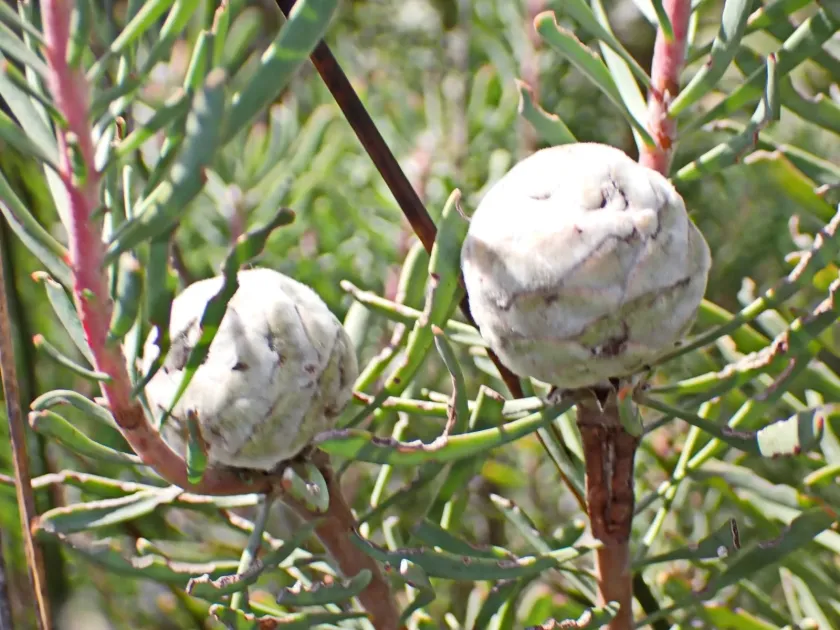
Description
Sowing dates
Seeds of Leucadendron galpinii are typically sown in late summer or early autumn to mirror natural cool-down cycles. Germination often requires smoke-based treatments or chemical primers to simulate post-fire conditions, which are essential for breaking seed dormancy in this species.
The sowing substrate must be highly porous, acidic, and free of nutrient-rich organic matter. A mixture of clean river sand and peat is generally recommended to ensure optimal drainage and prevent seed damping-off during the initial development phase.
Seedlings exhibit slow growth rates and require careful handling during the pricking-out stage. Once the first true leaves emerge, they should be transplanted into individual pots to avoid root competition and to establish a robust root system before field planting.
Vegetative propagation using semi-hardwood cuttings is the preferred method for commercial production. Cuttings are taken in spring, treated with appropriate rooting hormones, and placed in a well-ventilated, high-humidity environment to encourage rapid root formation.
The depth of sowing should be managed precisely, usually at about 5–10 mm below the surface. After sowing, keeping the surface moist but not waterlogged is critical for successful germination and initial establishment of the young plants.
Growing requirements
As a member of the Proteaceae family, Leucadendron galpinii is adapted to nutrient-poor soils, especially those low in phosphorus. High levels of phosphorus can be toxic to the plant, so fertilizer application must be avoided or strictly controlled.
The plants thrive in acidic soils with a pH ranging from 5.0 to 6.0. Good drainage is paramount; the root system is highly susceptible to fungal pathogens if the soil becomes compacted or waterlogged for extended periods.
Climate requirements include a Mediterranean-style environment with mild, wet winters and warm, dry summers. The species can tolerate light frosts, but severe cold snaps can damage tender shoots, necessitating protection in colder regions.
Regular irrigation is needed during the active growing season, though the frequency should be adjusted based on evaporation rates. Mulching with inorganic materials like gravel helps regulate soil temperature and keeps the root zone cool, which is essential for plant health.
Excellent air circulation is required to maintain plant vigor. In greenhouse cultivation, fans and proper spacing are necessary to prevent the buildup of humidity around the foliage, which can lead to various leaf-spot diseases.
Main diseases and pests
Root rot caused by Phytophthora species is the most significant threat to Leucadendron galpinii. This pathogen thrives in wet soil conditions and can cause rapid wilting and death, making proper drainage the primary defense mechanism.
Scale insects and mealybugs are common pests that attack the stems and foliage. These insects extract sap and weaken the plant, which may also facilitate the growth of sooty mold, further reducing the photosynthetic capacity of the plant.
In greenhouse settings, powdery mildew can become an issue if ventilation is poor. Maintaining low humidity around the leaf surfaces and ensuring sufficient space between plants are effective preventive measures against fungal infections.
Iron deficiency and general chlorosis are often observed if the irrigation water is alkaline or high in calcium content. Regular testing of water and soil pH is necessary to adjust nutrient availability and prevent these physiological disorders.
Routine monitoring is essential for early detection of any health issues. Infected plants should be isolated immediately to prevent the spread of soil-borne pathogens or insect colonies to the rest of the crop.
Harvesting
Leucadendron galpinii is primarily harvested for the cut flower industry. The bracts are highly prized for their unique texture and vibrant coloration, making them a staple in high-end floral arrangements and dried flower designs.
Harvesting should occur once the colorful bracts are fully developed and show their characteristic hue. Sharp pruning shears must be used to ensure clean, slanted cuts that allow for better water uptake and prevent crushing the stem tissue.
Post-harvest care involves removing the lower leaves to prevent bacterial growth in the vase water. The stems are then sorted, bunched, and graded based on length and bract maturity to meet commercial quality standards.
During transport, it is vital to maintain a cool, well-ventilated environment. Leucadendron stems are known for their long vase life, often lasting several weeks if kept in appropriate conditions away from direct heat or intense light.
Care must be taken to avoid mechanical damage during the harvesting process, as bracts are delicate and easily bruised. Cleanliness of tools is equally important to avoid transmitting pathogens between plants during the harvest cycle.