
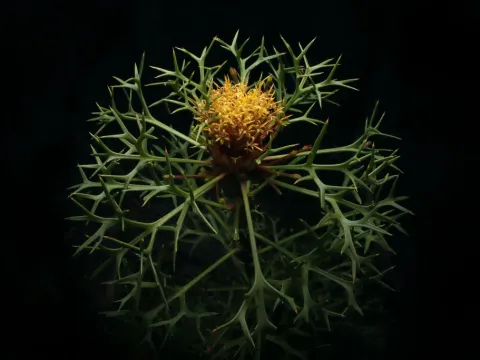
Isopogon
Isopogon R. Br.
Isopogon is a genus of evergreen shrubs belonging to the Proteaceae family, native to Australia. These plants are widely recognized for their unique, globe-shaped flower heads, which earn them the common name of drumstick flowers, making them highly prized in the floral industry.
What the section contains


Isopogon
Successful cultivation of Isopogon requires well-drained, sandy, and nutrient-poor soils. Like most members of the Proteaceae family, they are extremely sensitive to high phosphorus levels, which can be toxic to their root systems; therefore, phosphorus-free or low-phosphorus fertilizers must be used.
The climate requirements include a Mediterranean-like environment with mild winters and warm, sunny summers. Because they are not frost-tolerant, cultivation in temperate climates is limited to controlled environments such as greenhouses, conservatories, or as container-grown plants.
Proper aeration is essential for the root health of the plant. A high-quality drainage layer is a mandatory requirement to prevent waterlogging, as the root systems are prone to fungal infections when exposed to stagnant moisture for prolonged periods.
The primary economic value of Isopogon lies in its use as a specialty cut flower. The long-lasting nature of its woody inflorescences makes it an excellent choice for high-end floral arrangements, bouquets, and sophisticated interior decorations.
Root rot, primarily caused by Phytophthora species, is the most significant threat to Isopogon. This pathogen thrives in wet, poorly aerated conditions and can quickly lead to the decline and death of the plant if drainage is not optimized.
Pests such as spider mites and scale insects often pose a threat when plants are grown in indoor conditions or dry greenhouse environments. Regular monitoring of the foliage is necessary to detect infestations before they reach critical levels.
Nutrient imbalances, particularly high pH levels, can induce chlorosis, leading to yellowing of the leaves and stunted growth. Corrective measures include using acidic water sources and ensuring the growing medium maintains an appropriately acidic pH.
Over-fertilization, especially with nitrogen, should be avoided as it encourages weak, succulent growth that is susceptible to aphids and fungal leaf spot diseases, which can ruin the aesthetic appearance of the plant.
Management of these threats relies heavily on cultural practices, including strict adherence to watering regimes, the use of sterile growing media, and the application of systemic pesticides only when cultural control measures are insufficient.