
Leucadendron teretifolium
Leucadendron teretifolium
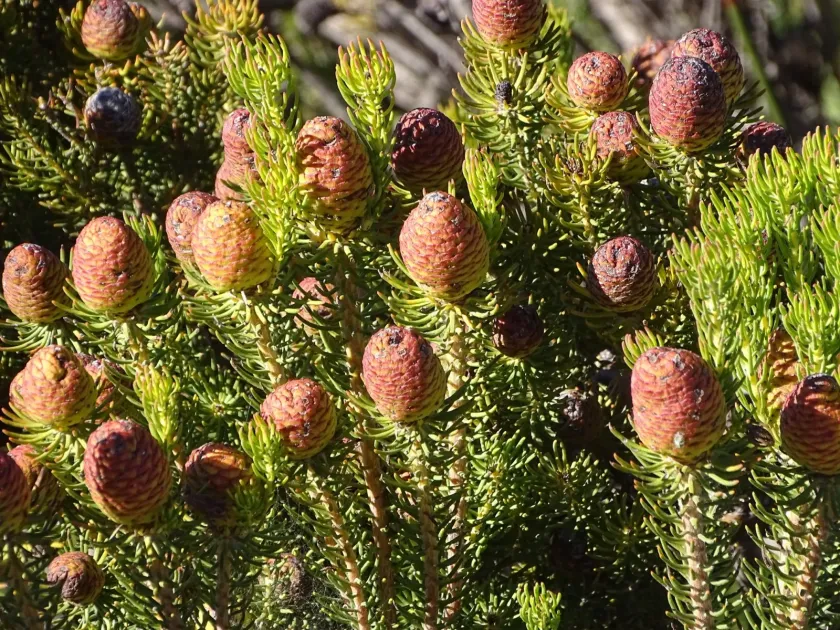
Description
Sowing dates
Leucadendron teretifolium, a member of the Proteaceae family, is typically propagated through seeds or cuttings under controlled greenhouse environments.
The optimal sowing time occurs in late winter or early spring, providing the young plants with enough time to establish before the warmer season begins.
Seeds often require specific treatments such as smoke exposure or scarification to mimic the post-fire environmental conditions necessary for germination.
A well-draining, nutrient-poor substrate is essential, as these plants have adapted to grow in harsh, low-phosphorus soils.
Seedlings should be kept in well-ventilated conditions with ample sunlight, ensuring a gradual acclimatization before being moved to permanent locations.
Growing requirements
Native to the South African fynbos, this shrub requires environmental conditions that replicate its specific natural habitat for healthy growth.
Full sun exposure is mandatory, combined with excellent air circulation to prevent moisture accumulation around the foliage.
Soil requirements are strict: the medium must be acidic, well-draining, and extremely low in phosphorus, which is toxic to most Leucadendron species.
Watering should be managed with care; while the plants appreciate moisture during the growing phase, they are highly susceptible to root rot in waterlogged soils.
Temperatures should remain moderate, as the plants struggle in high-humidity, stagnant air conditions often found in improperly managed greenhouses.
Main diseases and pests
Root rot, primarily caused by Phytophthora species, remains the most significant threat to the survival of Leucadendron teretifolium in cultivation.
Poor soil drainage leads to rapid degradation of the root system, often resulting in sudden wilting and death of the entire shrub.
Pests such as mealybugs and spider mites are common in greenhouse settings, particularly when humidity control is neglected.
Aphids may cause damage to the developing bracts, affecting the marketability and visual quality of the flowers produced for trade.
Prevention involves strict hygiene protocols, using sterile tools, and avoiding the use of phosphorus-based fertilizers that weaken the plant's natural defenses.
Harvesting
The primary agricultural use of Leucadendron teretifolium is the production of high-quality cut foliage and flowering stems for the florist industry.
Harvesting is performed when the colorful bracts have reached their peak maturity, ensuring optimal color intensity and vase life.
Proper harvesting techniques include leaving enough healthy foliage on the main plant to support continued development in the following cycles.
Post-harvest care involves immediate stem hydration in clean water, often combined with mild preservatives to maintain vascular integrity.
The stems are typically stored and transported under refrigerated conditions to preserve their unique structure and aesthetic appeal for global markets.