
Rhynchonia
x Rhynchonia J. M. H. Shaw
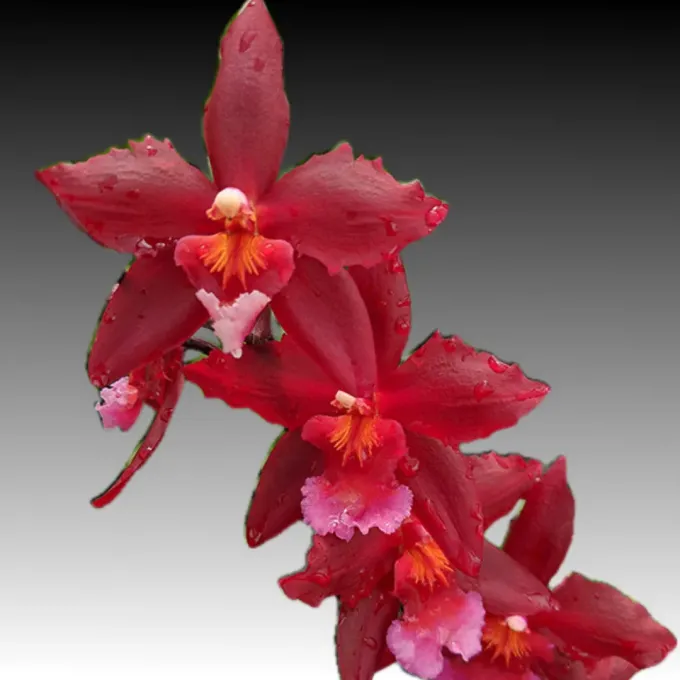
Description
Growing requirements
Rhynchonia (x Rhynchonia) is a sophisticated intergeneric orchid hybrid, resulting from the cross-breeding of Rhynchostylis and Miltonia. It belongs to the Orchidaceae family and is highly prized for its unique, fragrant, and vibrant floral displays.
This crop requires strict adherence to tropical environmental parameters to thrive. An essential condition for successful growth is maintaining a temperature differential of at least 5 degrees Celsius between day and night cycles.
High relative humidity, typically between 60% and 80%, is mandatory for the plant to maintain turgor in its leaves and pseudobulbs. In home environments, automated humidifiers or humidity trays are recommended to prevent dehydration.
The potting medium must be exceptionally well-drained and provide adequate aeration. A substrate consisting primarily of high-quality pine bark, mixed with perlite or charcoal, is ideal to prevent root rot and promote healthy root respiration.
Rhynchonia thrives in bright but indirect sunlight. Excessive exposure to direct solar radiation can damage the foliage, leading to necrosis, while insufficient light levels will significantly inhibit the plant's ability to bloom.
Main diseases and pests
Common pests affecting Rhynchonia include spider mites and mealybugs, which tend to congregate in the leaf axils. Regular inspection of the plant's foliage is critical to identify early infestations before they spread.
Root rot and crown rot are frequent issues caused by overwatering or poor drainage. Once roots begin to decay, the plant loses its ability to uptake nutrients, necessitating a full repotting process and pruning of dead matter.
Bacterial and fungal spots can manifest as dark lesions on the leaves, usually triggered by stagnant, cold, and humid conditions. Improved air circulation is the primary defensive strategy against these physiological stressors.
Viral infections can affect these hybrids, often showing as irregular color patterns or stunted growth. Since viruses are untreatable, such plants must be isolated immediately to prevent systemic spread within the collection.
Integrated pest management, involving organic soaps or horticultural oils, is recommended for controlling common greenhouse pests. Always ensure that the chemical treatments are specifically labeled as safe for use on sensitive orchid tissue.