
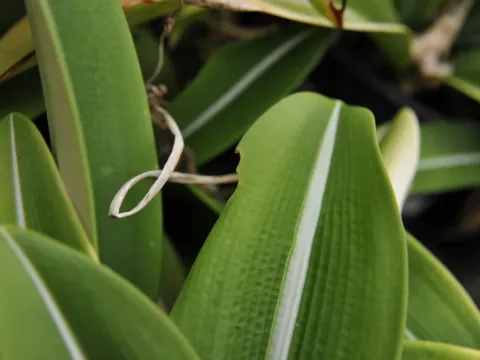
Hippeastrum
Hippeastrum
Hippeastrum is a prominent genus of bulbous perennials belonging to the Amaryllidaceae family, originating primarily from the tropical regions of South and Central America.
What the section contains
 Butterfly Amaryllis
Hippeastrum papilio
Butterfly Amaryllis
Hippeastrum papilio
 Hippeastrum aulicum
Hippeastrum aulicum
Hippeastrum aulicum
 Hippeastrum calyptratum
Hippeastrum calyptratum
Hippeastrum calyptratum
 Hippeastrum elegans
Hippeastrum elegans
Hippeastrum elegans
 Hippeastrum evansiae
Hippeastrum evansiae
Hippeastrum evansiae
 Hippeastrum hybrids
Hippeastrum hybrids
Hippeastrum hybrids
 Hippeastrum leopoldii
Hippeastrum organense
Hippeastrum organense
Hippeastrum leopoldii
Hippeastrum leopoldii
Hippeastrum organense
Hippeastrum organense
 Hippeastrum puniceum
Hippeastrum puniceum
Hippeastrum puniceum
 Hippeastrum reticulatum
Hippeastrum reticulatum
Hippeastrum reticulatum
 Hippeastrum striatum
Hippeastrum striatum
Hippeastrum striatum
 Hippeastrum vittatum
Hippeastrum vittatum
Hippeastrum vittatum
 Leopard hippeastrum
Hippeastrum pardinum
Leopard hippeastrum
Hippeastrum pardinum
 Parrot Amaryllis
Hippeastrum psittacinum
Parrot Amaryllis
Hippeastrum psittacinum
Hippeastrum
Successful cultivation requires a well-draining, nutrient-rich soil mixture, often composed of loam, peat, and sand to ensure optimal moisture regulation around the bulb.
These plants thrive in bright, indirect light, which is essential for healthy leaf development and the future initiation of flower buds after the dormancy period.
Temperature management is crucial: during the growing phase, plants prefer a range of 20–25 °C, while dormancy requires cooler conditions between 12–15 °C.
Watering must be precise, focusing on keeping the substrate slightly moist during active growth while maintaining almost dry conditions during the winter rest phase.
The yield of Hippeastrum is typically evaluated based on bulb vigor and the number of flower spikes produced per flowering cycle under controlled agricultural conditions.
High-quality mature bulbs, generally exceeding 7–8 cm in diameter, are capable of producing multiple scapes with several large, showy blooms per stalk.
In commercial bulb production, the efficiency of propagation—measured by the number of offset bulbs produced by the mother plant—is the primary yield indicator.
Techniques such as bulb scaling and cutting are employed to maximize the reproduction rates of elite varieties in professional horticultural nurseries.
The total yield is also influenced by the nutrient management strategy, ensuring that bulbs accumulate sufficient energy reserves during the green growing season.
Stagonospora curtisii, commonly known as "red blotch," represents the most severe pathogenic threat, causing necrotic red lesions on foliage and bulb scales.
Fusarium basal rot and various Phytophthora species pose significant risks to bulb integrity, particularly in greenhouse environments with excessive soil humidity.
Common insect pests include the Amaryllis borer, mealybugs, and spider mites, which can rapidly diminish plant vitality and serve as vectors for viral diseases.
Proper sanitation, including the sterilization of tools and the use of healthy, pathogen-free planting stock, is vital for integrated pest management.
Chemical control programs involving systemic fungicides are standard practice to mitigate the economic impact of these widespread fungal and insect pressures.
The harvesting process for Hippeastrum bulbs commences when the foliage exhibits natural senescence, indicating that the bulb has reached maximum energy saturation.
Bulbs are carefully lifted from the growing medium to minimize mechanical damage, then cleaned of soil debris and decayed roots to prevent storage rot.
Curing is an essential post-harvest step where bulbs are kept in a well-ventilated area to allow the protective outer scales to harden and dry properly.
After curing, bulbs are sorted by circumference and grade, ensuring that only high-quality specimens are selected for shipment or long-term storage.
Optimal storage conditions—characterized by low humidity and steady, cool temperatures—are critical to maintain bulb dormancy until the next planting season.