
Hippeastrum vittatum
Hippeastrum vittatum
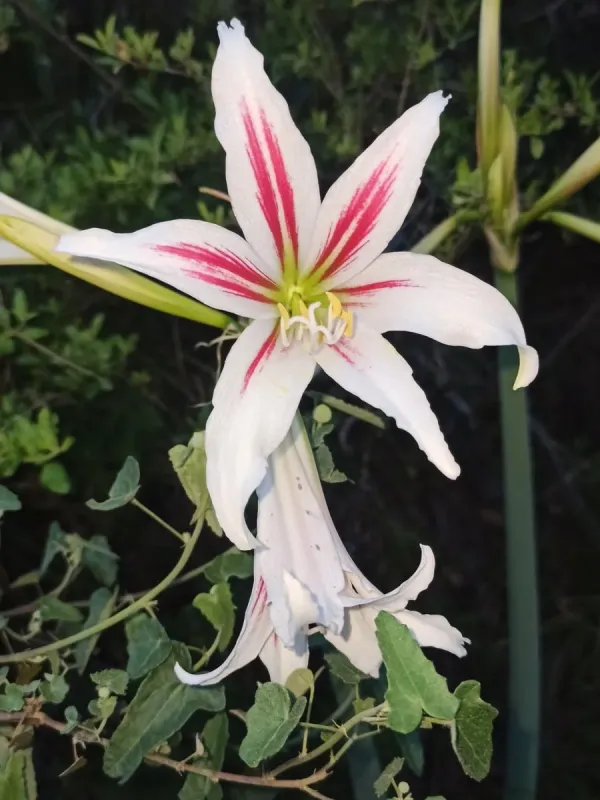
Description
Growing requirements
Hippeastrum vittatum, commonly known as the striped lily, belongs to the Amaryllidaceae family. It is native to the tropical regions of South America, specifically coastal Brazil, where it thrives in well-drained, nutrient-rich soils.
This crop requires bright, indirect light to maintain healthy foliage and stimulate bud formation. Direct exposure to the harsh midday sun should be avoided to prevent tissue damage and wilting of the leaves.
The ideal soil for cultivation must be porous and fertile. A mixture composed of loam, organic compost, and coarse sand or perlite is recommended to ensure effective drainage and prevent root rot.
Water management is critical; the substrate should be kept consistently moist during the growth phase but never waterlogged. As the plant enters dormancy, water supply must be significantly reduced to allow the bulb to rest.
Temperature control is essential for successful flowering. The plant performs best in a temperature range of 20–25 degrees Celsius during the active season and prefers a cooler environment around 12–15 degrees during the winter dormancy period.
Yield
The economic value of Hippeastrum vittatum is primarily linked to the ornamental market, where it is highly sought after for its large, distinctive striped flowers. It is widely used in both potted plant sales and the cut-flower industry.
Productivity is measured by the number of flower scapes and blooms per bulb. A healthy, mature bulb is capable of producing multiple scapes, each carrying several large, trumpet-shaped flowers.
Cultivation efficiency is enhanced by vegetative propagation, involving the separation of offsets from the mother bulb. This allows for a continuous supply of high-quality plant material for commercial distribution.
Fertilization with a balanced NPK fertilizer during the vegetative growth phase is necessary to ensure the bulb stores enough energy for the next blooming cycle. This practice directly correlates with higher yields of flower scapes.
With appropriate care, bulbs can remain productive for several years, making them a sustainable and profitable choice for specialized floral nurseries and greenhouse operations.
Main diseases and pests
Stagonospora curtisii, commonly known as red blotch, is a significant fungal threat to the crop. It manifests as red lesions on the bulb scales and leaves, potentially causing structural damage to the plant.
Pests such as the amaryllis borer and spider mites can cause severe damage by feeding on plant tissues. These infestations weaken the bulb, making it more susceptible to opportunistic secondary infections.
Maintaining proper hygiene in the greenhouse and ensuring good air circulation around the plants are primary steps for integrated pest management.
- Bulb rot (Fusarium)
- Thrips
- Scale insects
- Mealybugs
Chemical control involving systemic fungicides and specialized insecticides is recommended when pests or disease symptoms exceed economic threshold levels. Always adhere to local safety regulations when applying treatments.