
Hippeastrum leopoldii
Hippeastrum leopoldii
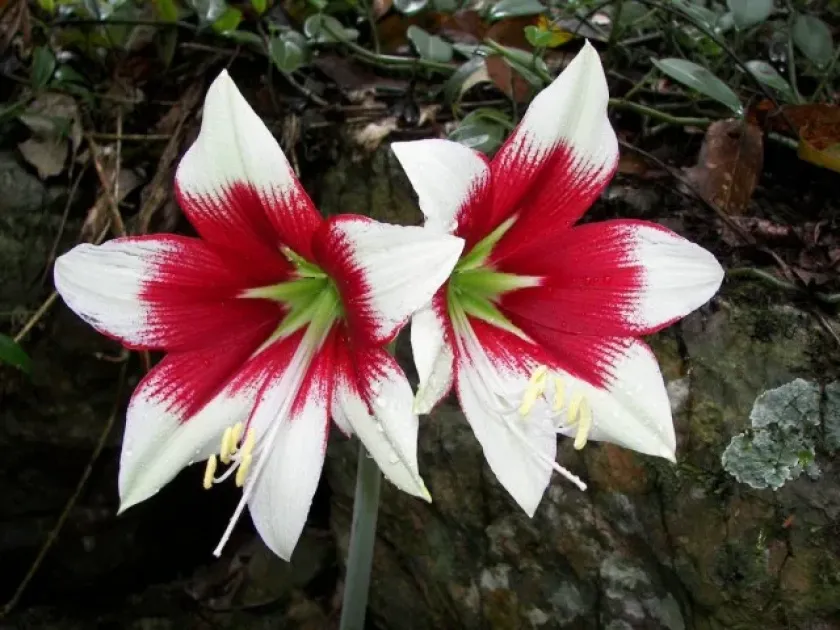
Description
Growing requirements
Hippeastrum leopoldii is a distinguished bulbous plant belonging to the Amaryllidaceae family, originating from the tropical highlands of Peru and Bolivia. It is highly valued for its large, open, saucer-shaped flowers, which typically feature a prominent white star pattern at the center, serving as a primary parent for many commercial hybrids.
The plant thrives in bright, indirect sunlight, as intense direct sun can scorch its broad leaves. During the active growing season, temperatures between 20–25°C are ideal, while the dormant winter phase requires cooler temperatures (12–15°C) to ensure healthy development and subsequent blooming.
Success in cultivation requires well-draining, nutrient-rich soil that prevents waterlogging. A mixture comprising loamy soil, peat, and coarse sand or perlite is recommended to maintain the necessary aeration for the roots, which are highly sensitive to stagnant moisture.
Watering must be approached with caution; during the growth cycle, water should be applied only when the top layer of the substrate is dry. During the dormancy period, watering should be significantly reduced or stopped entirely, depending on the storage conditions, to protect the bulb from rot.
In terms of commercial utility, this species is essential for professional greenhouse flower production and as a core genetic resource in hybridizing programs. Its aesthetic appeal and distinct color patterns make it a staple in both residential gardening and the high-end cut flower industry.
Main diseases and pests
The most significant pathological threat is Stagonospora curtisii, commonly known as red blotch. It manifests as red spots or streaks on the leaves and bulbs, and if left untreated, it can severely compromise the plant's structural integrity.
Insect pests such as spider mites and scale insects are frequently encountered in controlled indoor environments. These pests thrive in dry conditions and can quickly weaken the plant by feeding on its sap, which necessitates regular inspections and the application of systemic pesticides.
Bulb mites represent a dangerous hidden threat that targets the root system and the base of the bulb. Infestation often leads to rapid decay, making sterilization of soil and careful selection of healthy bulbs the primary methods of preventative control.
Thrips damage can lead to aesthetic degradation of the foliage and flowers, necessitating the use of sticky traps and targeted spray treatments. Ensuring good air circulation and maintaining appropriate humidity levels are vital for mitigating the impact of these pests.
Finally, improper moisture management during storage is the most common cause of bacterial and fungal rots. Maintaining a dry, well-ventilated storage area for the dormant bulbs is the cornerstone of effective disease management for this species.