
Hippeastrum aulicum
Hippeastrum aulicum
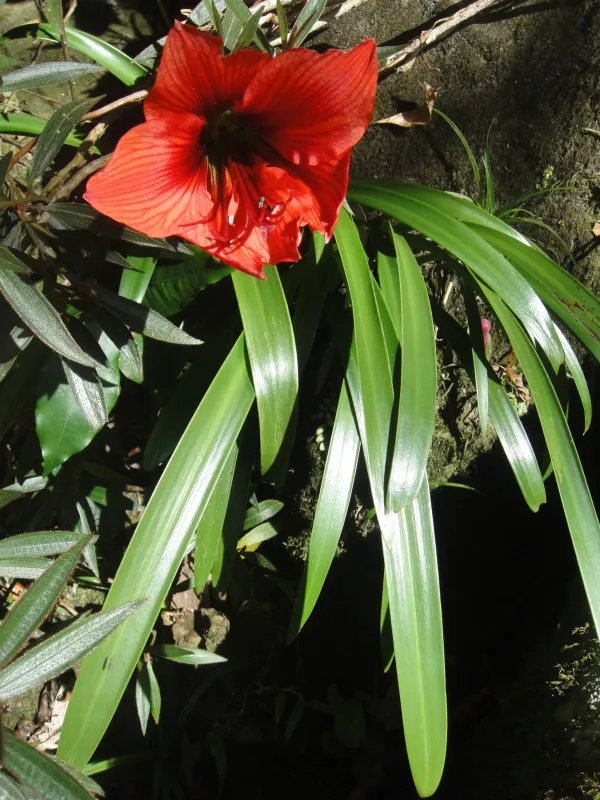
Description
Growing requirements
Hippeastrum aulicum, often referred to as the "Knight's Star Lily," is a member of the Amaryllidaceae family. Native to the Atlantic forest regions of Brazil, it is uniquely adapted to epiphytic conditions, growing on trees and rocks rather than solely in soil.
The plant thrives in bright, indirect light. Providing protection from intense direct sunlight is essential to maintain foliage health and prevent dehydration of the bulbs. It is an excellent choice for indoor cultivation in temperate climates.
The growing medium must be highly porous. A mixture of pine bark, coarse sand, and organic peat provides the drainage necessary to mimic the natural environment. Standard potting soil is often too dense and risks rotting the bulb.
Temperature management is critical for the lifecycle. During the growing season, temperatures between 20°C and 25°C are ideal. A cooling period of approximately 15°C is required during winter dormancy to trigger the development of future flower stalks.
Watering should be rhythmic. During the active phase, keep the substrate consistently moist but never waterlogged. During dormancy, watering should be reduced to a minimum to prevent the bulb from decaying, ensuring long-term plant survival.
Main diseases and pests
Stagonospora curtisii, commonly known as "red blotch" or "red fire," is the most significant disease for this species. It appears as dark red lesions on the bulb scales, leaves, and flower stalks, often exacerbated by high humidity.
Mealybugs are frequent pests that hide in the crevices of the leaves and at the base of the bulb. Their presence can be identified by a white, cotton-like substance, requiring manual removal or systemic treatment.
Fungus gnats can become a nuisance if the substrate remains too wet for extended periods. The larvae feed on organic matter and potentially on the roots, which can weaken the plant over time.
Bulb mites can be devastating, boring into the basal plate and causing the bulb to collapse. Prevention is better than treatment: only use sterilized substrate and carefully inspect new bulbs before introducing them to your collection.
Regular maintenance, such as cleaning the leaves and ensuring proper airflow, significantly reduces the likelihood of outbreaks. If an infestation is detected, immediate isolation of the plant is necessary to protect the rest of the collection.