
Hippeastrum reticulatum
Hippeastrum reticulatum
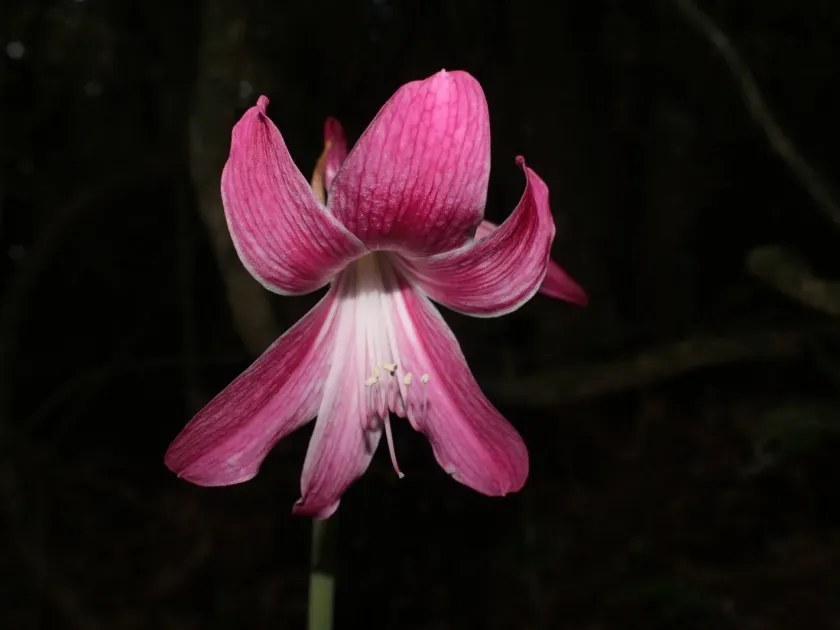
Description
Growing requirements
Hippeastrum reticulatum is a perennial bulbous plant belonging to the Amaryllidaceae family. It is particularly distinguished by its beautiful dark green leaves with a prominent white central stripe and delicate, reticulated flowers.
The species originates from the tropical regions of Brazil. As a rainforest dweller, it thrives in environments characterized by high humidity and filtered light rather than harsh, direct sun exposure.
For successful cultivation, the plant requires a loose, well-draining potting medium rich in organic matter. Maintaining a slightly acidic to neutral soil pH is crucial for optimal nutrient uptake.
Temperature management is key, with an ideal range of 20–25 degrees Celsius during the growing phase. Cold drafts should be strictly avoided as they can cause significant stress and growth retardation.
Agricultural practices include consistent watering during the active growth season, ensuring that the soil remains moist but not waterlogged to prevent bulb rot.
Main diseases and pests
Stagonospora curtisii, commonly known as red blotch disease, is the most prevalent fungal threat to this species, usually triggered by stagnant water and poor air circulation.
Mealybugs are frequent pests that infest the leaf axils, sucking plant sap and leading to stunted growth. Manual removal and systemic insecticides are effective control measures.
Spider mites can rapidly colonize plants in low-humidity environments, leading to leaf discoloration and necrosis. Regular misting or increased humidity helps deter these pests.
Soft scale insects may also pose a risk, attaching themselves to the base of the leaves and stems, requiring mechanical cleaning or chemical intervention.
Maintaining a clean growing environment and practicing good sanitation is essential to minimize the risk of pest and disease outbreaks in a greenhouse or indoor collection.