
Hippeastrum elegans
Hippeastrum elegans
Description
Growing requirements
Hippeastrum elegans is a perennial bulbous plant belonging to the Amaryllidaceae family. Originating from the tropical forests of South America, this species thrives in well-drained, nutrient-rich soils under the dappled light of the forest canopy.
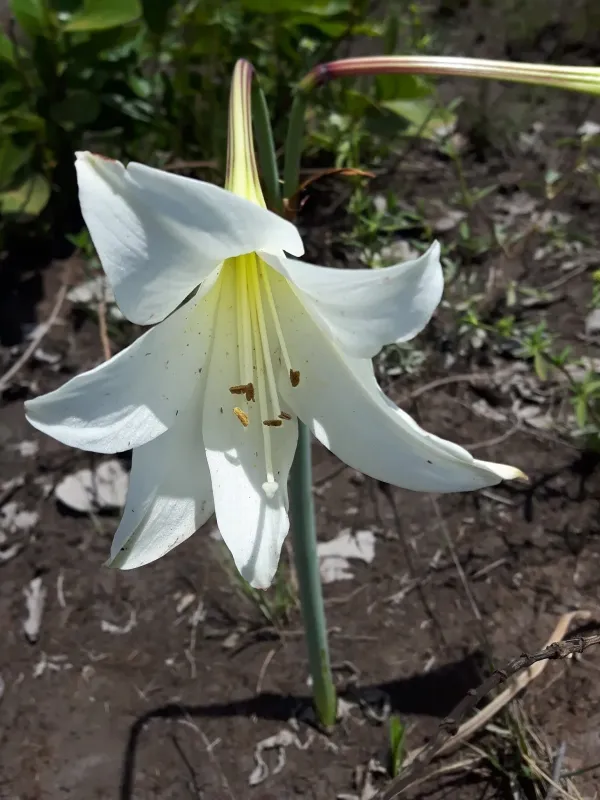
The plant features a robust bulb, reaching 8–10 cm in diameter, which supports long, strap-shaped leaves. Its inflorescence stands at 50–70 cm, producing elegant, funnel-shaped flowers characterized by white or cream petals with distinctive green or reddish stripes and a subtle fragrance.
Successful cultivation requires maintaining temperatures between 18 °C and 24 °C during the growing season. The soil must be highly porous, composed of a mix of leaf mold, peat, and coarse sand to ensure efficient drainage and prevent bulb rot.
A mandatory dormant period of two to three months is essential for the plant's life cycle. During this phase, water should be significantly reduced and the temperature lowered to 12–15 °C to trigger the development of future flower stalks.
Economically, this species is primarily utilized in the ornamental industry, including commercial forcing for potted plant sales. Its unique floral structure makes it a valuable asset for hybridization and plant breeding programs.
Main diseases and pests
The most common disease affecting Hippeastrum elegans is Stagonospora curtisii, commonly known as "red blotch." This fungal infection manifests as reddish lesions on bulbs and leaves, often caused by excessive moisture and poor air circulation in the growing environment.
Pests such as spider mites and scale insects frequently infest these plants in greenhouse or indoor conditions. They sap the plant's vitality and create entry points for secondary bacterial or fungal infections, requiring systematic control using appropriate acaricides or systemic insecticides.
Thrips can also cause cosmetic damage to the floral parts and leaves, leading to stunted growth. Regular inspection and maintaining optimal humidity levels help in keeping these pest populations under control during the active growth period.
Root rot remains a critical threat, primarily due to improper potting medium or overwatering. Using pots with adequate drainage holes is a fundamental step in the agronomic management of this bulbous crop.
Integrated pest management, including regular sanitation and proper spacing, is necessary to maintain the health and vigor of Hippeastrum elegans collections, ensuring high-quality flower production annually.