
Hymenocallis longibracteata
Hymenocallis longibracteata
Description
Growing requirements
Hymenocallis longibracteata is a perennial bulbous plant belonging to the Amaryllidaceae family. Originating from the tropical regions of Central and South America, it is highly valued for its striking appearance and unique floral structure in horticultural practice.
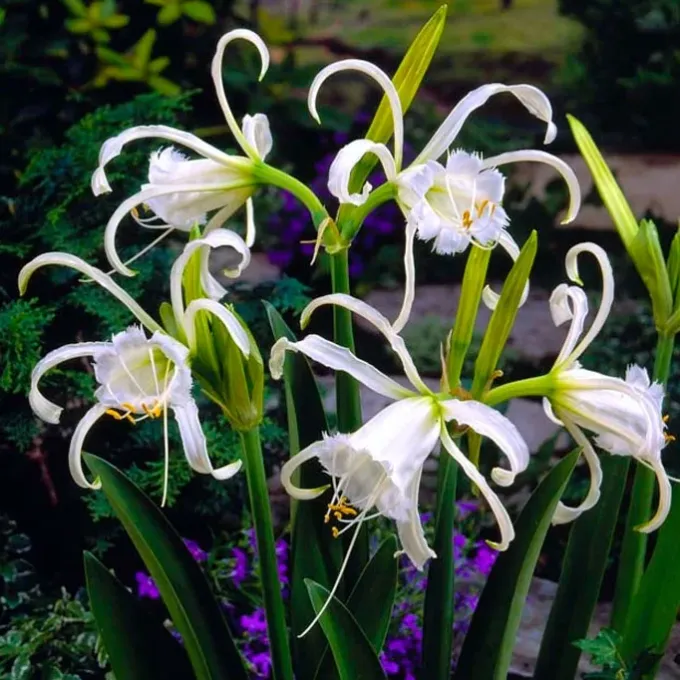
The plant features robust bulbs and long, strap-shaped leaves that grow in a rosette pattern. The inflorescences are characterized by large, fragrant white flowers with a central corona formed by fused stamens, giving them a distinct spider-like appearance, complemented by elongated bracts.
Cultivation requires well-drained, nutrient-rich soil with an acidic to neutral pH. It is essential to ensure the growing medium is aerated, as poor drainage is the primary cause of root and bulb system failure in this species.
The plant thrives in warm tropical climates with temperatures typically ranging between 20 and 25 degrees Celsius. During the dormant season, the plant should be kept in a cooler environment, approximately 12–15 degrees Celsius, to ensure a successful subsequent blooming cycle.
Regular irrigation is necessary during the active growing season, but the substrate must be allowed to dry out slightly between waterings to prevent bulb rot. Fertilizer applications should focus on balanced NPK ratios to support both vegetative growth and the development of the reproductive organs.
Main diseases and pests
The primary threats to this crop are fungal pathogens, specifically those causing basal rot and stagonospora blotch. These diseases are exacerbated by overwatering and high humidity levels in the surrounding soil and atmosphere, making drainage management critical.
Insect pests, including spider mites and mealybugs, are frequent issues, especially when the plant is grown in interior or greenhouse environments. Integrated pest management, including regular inspection and the use of insecticidal soaps or systemic chemicals, is required to maintain health.