
Hippeastrum hybrids
Hippeastrum hybrids
Description
Growing requirements
Hippeastrum hybrids are a popular group of ornamental bulbous plants belonging to the Amaryllidaceae family. Originating from the tropical regions of South America, these hybrids have been selectively bred to produce larger, more vibrant flowers compared to their wild counterparts.
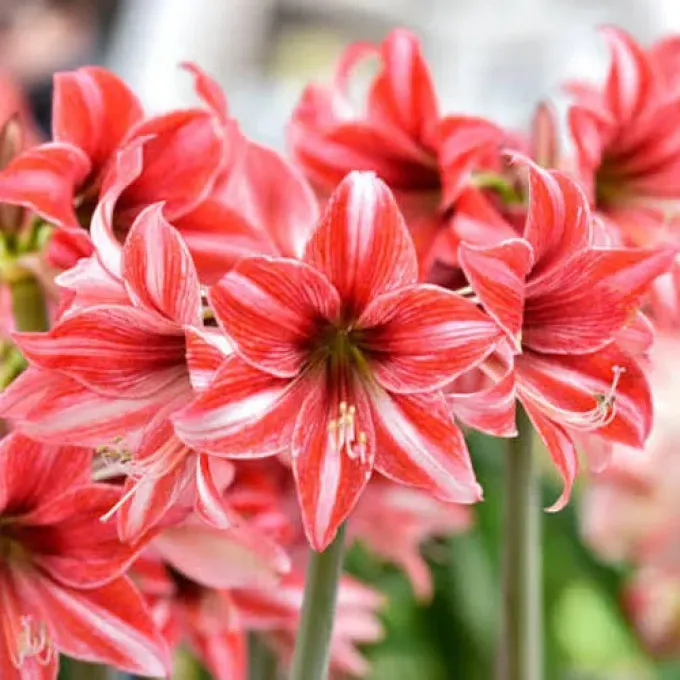
Botanically, the plant consists of a large, tunicated bulb that serves as a storage organ. The leaves are strap-shaped, typically appearing alongside or after the sturdy, hollow scape which carries an inflorescence of several large, trumpet-shaped flowers in various hues.
The crop requires bright, indirect light to thrive and bloom effectively. Direct exposure to intense midday sun is usually discouraged as it can scorch the foliage and reduce the aesthetic value of the plant during the growing season.
Soil requirements for Hippeastrum involve a substrate that is both fertile and extremely well-draining. A mix of peat moss, perlite, and organic compost is generally recommended to prevent the bulb from sitting in water, which is a major physiological risk.
Watering management is a critical component of cultivation. During the growth phase, soil should remain consistently moist but never saturated. Once the flowering period ends and foliage begins to yellow, water must be withheld to induce a period of dormancy.
Main diseases and pests
The most devastating disease for this culture is Stagonospora curtisii, commonly known as red blotch. It manifests as elongated red spots on leaves and bulbs, and if left untreated, it can lead to complete rotting of the bulbous tissue and subsequent plant death.
Pest issues include spider mites, which thrive in dry indoor air, and mealybugs that settle in the crevices between bulb scales. Additionally, the Narcissus bulb fly poses a major threat, as its larvae burrow into the bulb, effectively hollowing it out.
Harvesting
Harvesting bulbs for propagation or storage is performed at the end of the growth cycle when the leaves have turned brown. Bulbs should be carefully lifted, cleaned of debris, and stored in a cool, dark, and well-ventilated area to ensure a successful dormancy period.