
Hymenocallis occidentalis
Hymenocallis occidentalis
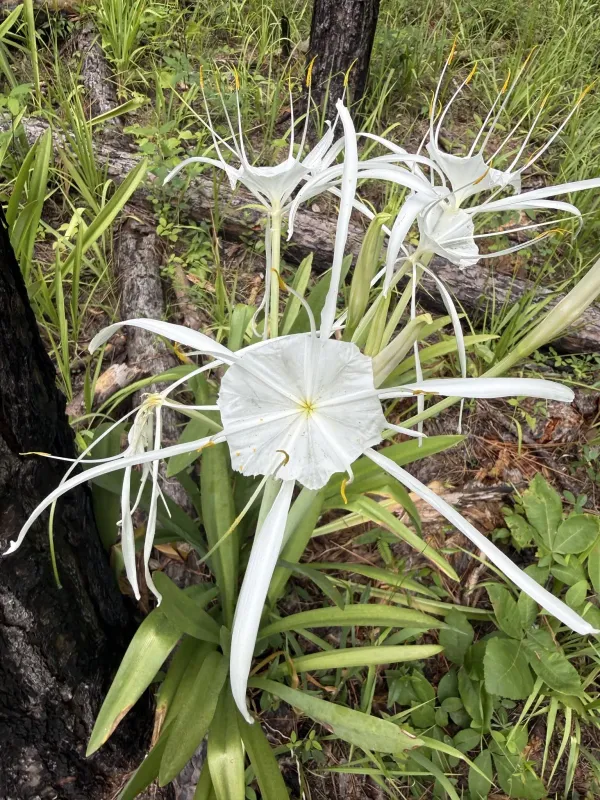
Description
Sowing dates
Planting Hymenocallis occidentalis bulbs in open ground should be performed during spring once the danger of frost has passed and the soil has sufficiently warmed.
Bulbs are typically planted at a depth equivalent to twice their diameter, ensuring adequate spacing between individual plants to accommodate root development.
Propagation is most efficiently achieved by separating offshoots from the parent bulb, a process best performed at the beginning of the active growing season.
For container-grown specimens, a nutrient-rich potting mix that provides excellent moisture retention while allowing for drainage is essential for healthy growth.
Site selection is crucial; the plant thrives in areas that offer consistent moisture levels and protection from harsh environmental conditions.
Growing requirements
As a member of the Amaryllidaceae family, Hymenocallis occidentalis is native to the southeastern United States, where it naturally inhabits moist floodplains and woodland edges.
The culture requires high moisture levels and is uniquely adapted to thrive in soils that remain consistently damp throughout the growing season.
Soil composition should be rich in organic matter, providing a balance of nutrient availability and structural integrity to support the plant's robust bulb and root system.
Optimal growth occurs in warm temperatures, typically between 20 and 25 degrees Celsius, with exposure to partial shade or filtered sunlight for best performance.
Regular fertilization with balanced nutrients during the vegetative phase ensures the development of the characteristic spider-like blooms that define this species.
Main diseases and pests
Fungal pathogens such as basal rot and bulb rot are the primary threats to Hymenocallis occidentalis, particularly when soil moisture levels are poorly managed.
Poor ventilation and waterlogged soil conditions provide an ideal environment for the proliferation of fungal infections that target the plant's delicate root and bulb tissues.
Pests like mealybugs and scale insects may infest the foliage, especially when plants are cultivated in greenhouses or indoors, requiring systematic monitoring.
Thrips can cause visible damage to the flower stalks and leaves, resulting in unsightly blemishes and potentially stunted growth during the blooming cycle.
Integrated pest management, including regular inspection and the use of targeted biological or chemical treatments, is essential to maintaining healthy stands of this plant.