
Butterfly Amaryllis
Hippeastrum papilio
Description
Growing requirements
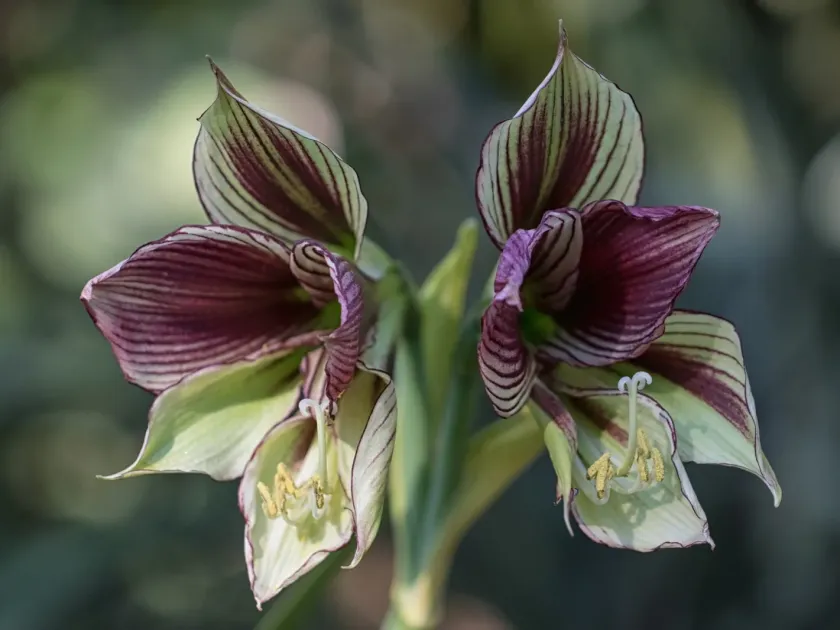
Butterfly Amaryllis (Hippeastrum papilio) is a perennial bulbous plant belonging to the Amaryllidaceae family. Native to the Atlantic forests of southern Brazil, this species thrives in tropical climates with high humidity levels.
The culture requires bright, indirect light to maintain healthy foliage and ensure regular blooming cycles. Exposure to direct afternoon sun should be avoided as it can scorch the leaves and weaken the plant's structural integrity.
Soil requirements focus on high drainage capacity and nutrient richness. A mixture comprising peat, perlite, and organic compost is recommended to ensure the root system is well-aerated while retaining enough moisture for development.
Agronomic management involves a distinct dormant period, during which watering should be significantly reduced. During the active growing season, consistent moisture is essential for the production of the inflorescence.
The primary horticultural use of this species is ornamental. It is highly valued by collectors and professional growers for its unique, moth-like flower patterns, which make it an excellent candidate for specialized breeding programs.
Main diseases and pests
The most common disease affecting the Butterfly Amaryllis is red blotch disease, caused by the fungus Stagonospora curtisii. This pathogen creates reddish streaks on leaves and bulbs, potentially leading to tissue necrosis.
Insect pests, specifically mealybugs and spider mites, represent a significant risk to greenhouse populations. These pests thrive in warm, dry environments and can quickly infest entire collections if left unmanaged.
Management strategies for threats rely on chemical control measures and rigorous sanitation protocols. Infected plants should be isolated immediately to prevent the transmission of fungal spores to healthy specimens.
Preventative cultural practices include ensuring proper airflow and spacing between pots to reduce humidity accumulation. Maintaining plant hygiene by removing dead or yellowing leaves is crucial for preventing disease outbreaks.
Integrated pest management (IPM) should prioritize early detection and the use of eco-friendly biological agents where possible to maintain the long-term health of the bulbous stock.