
Haemanthus cinnabarinus
Haemanthus cinnabarinus
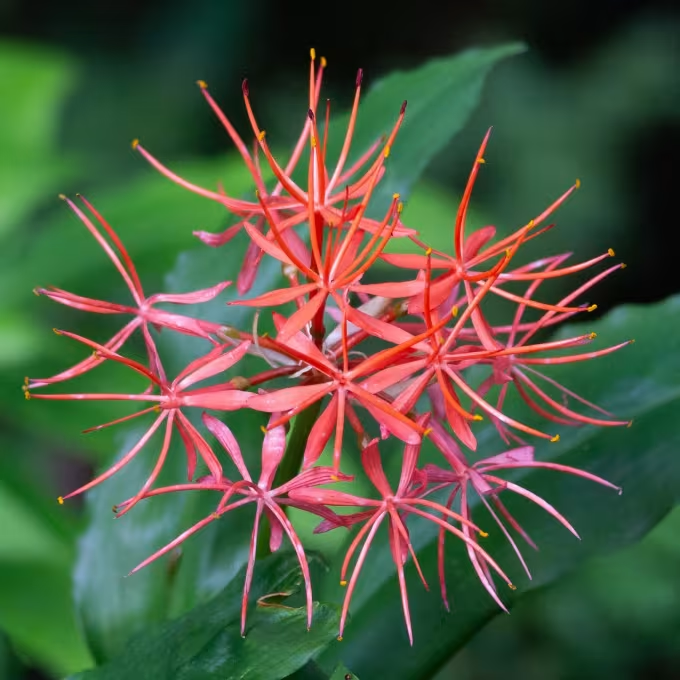
Description
Growing requirements
Haemanthus cinnabarinus is a perennial bulbous plant belonging to the Amaryllidaceae family. It is native to the tropical forests of West and Central Africa, where it grows in the shaded understory.
To cultivate this species successfully, growers must mimic its natural environment by providing bright but filtered light. Direct sun exposure should be strictly avoided as it damages the sensitive foliage.
The plant requires a well-draining, nutrient-rich soil medium. A mixture consisting of leaf mold, peat, and coarse sand is ideal for preventing water stagnation around the bulb, which is critical for its health.
Temperature requirements are consistent with tropical climates, ideally maintained between 18C and 24C. Proper ventilation is essential to ensure healthy growth and to prevent the accumulation of excess humidity around the plant base.
Economically, Haemanthus cinnabarinus is used primarily in ornamental horticulture. Its unique cinnabar-red inflorescences make it a sought-after specimen for conservatory collections and high-end interior landscaping.
Main diseases and pests
The most significant threat to Haemanthus cinnabarinus is bulb rot caused by overwatering. Excess moisture in the root zone quickly promotes fungal growth, which leads to the decay of the bulb and eventual death of the plant.
Mealybugs are a common pest that can infest the foliage, particularly near the base of the leaves. These insects weaken the plant by feeding on sap and are notoriously difficult to control if not spotted early.
Scale insects present another challenge, often manifesting as brown bumps on the leaves. Manual removal combined with the application of horticultural oils or systemic insecticides is recommended to manage these populations.
Spider mites may become an issue if the indoor climate is too dry. Maintaining proper humidity levels and regular inspection of the leaf undersides are the best preventive measures for this particular pest.
Good cultural practices, such as sterilizing tools and using fresh, pathogen-free soil for repotting, are the cornerstones of preventing disease. Should infection occur, localized fungicide application may be required to protect healthy tissue.