
Hymenocallis caribaea
Hymenocallis caribaea
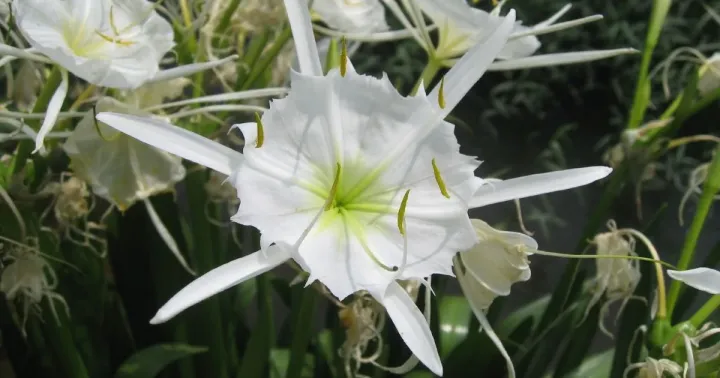
Description
Sowing dates
Planting of Hymenocallis caribaea in open fields or greenhouses should occur in the spring, once the soil temperature consistently exceeds 15 degrees Celsius.
The ideal planting window is between April and May, allowing the bulbs to establish a robust root system before the peak summer heat arrives.
For container-grown crops, planting can take place throughout the year, provided there is adequate supplemental lighting and controlled temperatures.
Bulbs are typically placed at a depth equal to two or three times their diameter, with the neck kept just above the soil level to prevent fungal rot.
Effective spacing for commercial production involves maintaining intervals of 30 to 40 centimeters to ensure adequate airflow and sunlight penetration.
Growing requirements
Hymenocallis caribaea, a member of the Amaryllidaceae family native to the Caribbean, thrives in well-draining, fertile soils with a neutral or slightly acidic pH.
The plant prefers bright, indirect sunlight; excessive exposure to harsh midday sun can lead to leaf scorching and reduce the aesthetic quality of the foliage.
A temperature range of 20 to 25 degrees Celsius is optimal for vegetative growth, while a period of rest at 12 to 15 degrees is beneficial for future blooming.
Watering should be consistent during the active growth phase, yet it is crucial to avoid waterlogged soil to prevent the onset of root and bulb decay.
Fertilization with a balanced NPK ratio every two to three weeks is recommended to support continuous leaf development and flower spike formation.
Main diseases and pests
The most significant threats to Hymenocallis caribaea include basal rot and other fungal pathogens that exploit high humidity and poor drainage conditions.
Common indoor and greenhouse pests include spider mites and mealybugs, which frequently infest the undersides of leaves, drawing out essential nutrients.
Thrips are also notable pests that cause streaking and discoloration on the foliage, significantly detracting from the plant's overall health and appearance.
Integrated pest management strategies should include regular leaf inspection and the prophylactic use of appropriate systemic fungicides or insecticides.
Maintaining proper hygiene by removing dead foliage and avoiding overhead irrigation can significantly reduce the risk of secondary infections.
Harvesting
Hymenocallis caribaea is commercially utilized primarily as an ornamental crop, valued for its unique, spider-like white blossoms and high vase life.
Harvesting bulbs for propagation is performed in late autumn after the foliage has naturally withered, indicating that the bulb has reached full maturity.
After lifting, the bulbs should be gently cleaned, allowed to cure in a dry, ventilated area, and stored in a cool environment at 13 to 15 degrees Celsius.
Storage media such as dry peat or sand can help maintain bulb integrity while preventing excessive dehydration or premature sprouting during the winter.
In frost-free tropical or subtropical climates, the plants may be kept in the ground continuously, requiring only periodic maintenance and thinning.