
Hippeastrum puniceum
Hippeastrum puniceum
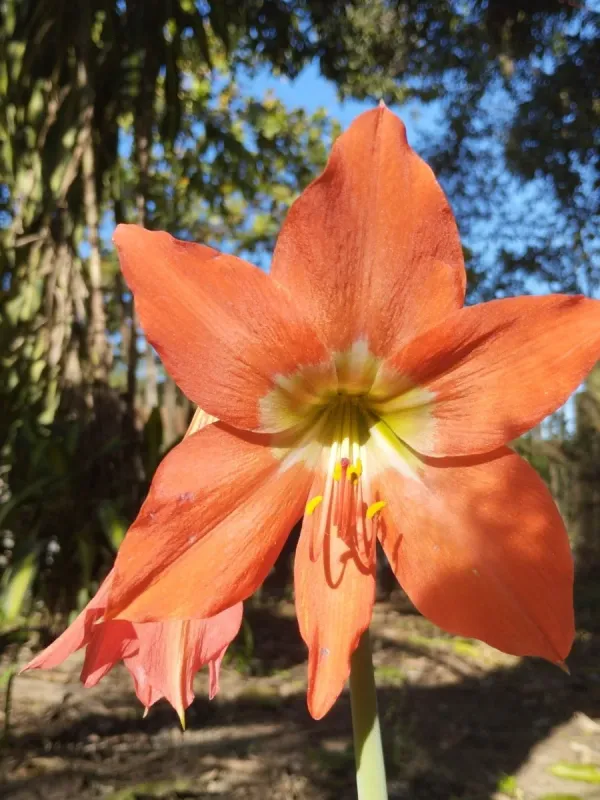
Description
Sowing dates
Propagation of Hippeastrum puniceum is most commonly achieved through the removal of offsets (bulblets) during the repotting process. This should be done after the dormancy period, ideally in early spring, to allow the plant to establish itself before the peak growing season.
Seed propagation is primarily reserved for hybridization and professional breeding. Seeds must be sown immediately after maturation because they possess low longevity, requiring a sterile, moist growing medium and stable warmth to germinate successfully.
When planting the bulbs, it is essential to ensure they are not buried too deeply. Approximately one-third to one-half of the bulb should remain above the soil level to prevent moisture-induced rot at the neck of the bulb and to ensure proper respiration.
Young plants require bright, indirect sunlight to develop healthy foliage. Direct exposure to intense noon sun can result in leaf scorching, so placing the plants near windows with curtains or in a greenhouse with shading is recommended.
Pre-planting treatment of bulbs with a fungicide is a critical agricultural practice to prevent soil-borne pathogens. This simple step ensures a healthier start for the plant and minimizes the risk of rot during the early stages of development.
Growing requirements
Hippeastrum puniceum, a member of the Amaryllidaceae family, is native to tropical regions of South and Central America. It thrives in well-draining, fertile soils rich in organic matter, preferring a slightly acidic to neutral pH balance.
The optimal temperature range for active growth is between +20°C and +25°C. The plant is sensitive to thermal stress and cold drafts, both of which can inhibit flowering and cause developmental delays during the vegetative cycle.
Watering management is key to successful cultivation. The soil should be kept moderately moist during the growing season but never soggy. During the winter dormancy, watering should be significantly reduced or stopped to encourage the plant to rest in a cooler environment.
Nutrient supplementation is necessary during the peak growth months. A balanced liquid fertilizer, rich in potassium and phosphorus, helps promote robust flowering and builds energy reserves within the bulb for the following season.
The growing medium must be porous to allow for good aeration. A mixture composed of loam, peat, and sand provides the necessary structure to support the plant while preventing water accumulation that could threaten the root system.
Main diseases and pests
Common pests that affect Hippeastrum puniceum include spider mites, scale insects, and mealybugs. These pests pierce the plant's tissue to feed on cell sap, leading to stunted growth, discoloration, and structural deformation of the leaves.
The most significant fungal threat is Stagonospora curtisii, commonly known as red blotch. This disease manifests as small red spots or elongated lesions on the bulb, leaves, and flower stalks, which can weaken the plant and lead to severe structural decay if left untreated.
Root rot caused by pathogens such as Pythium and Fusarium often occurs when the drainage is insufficient. Over-watering creates an anaerobic environment that is ideal for these fungi, leading to the rapid decay of the basal plate and root system.
Integrated pest management, including the use of systemic insecticides, is the most effective way to control infestations. Regularly inspecting the underside of the leaves and the neck of the bulb helps in early detection, significantly improving the chances of a full recovery.
For fungal infections, diseased plant tissue should be removed surgically, followed by treatment with systemic fungicides. After cleaning the bulb, it is essential to allow the tissue to dry completely before replanting it in fresh, sterile soil to prevent re-infection.