
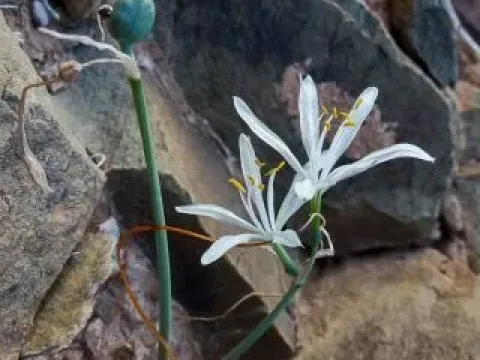
Hannonia
Hannonia
Hannonia is a distinct genus of bulbous plants within the Amaryllidaceae family. Propagation is mainly achieved through seeds that require precise timing to ensure optimal germination and early development.
What the section contains

Hannonia
The sowing process involves using a well-aerated, sandy-based medium. Seeds are typically sown shortly after harvest to maintain viability, as the embryos of such bulbous species can be sensitive to prolonged storage.
When planting bulbs, it is critical to ensure that the depth is approximately twice the diameter of the bulb. This placement helps regulate temperature and prevents the bulb from drying out while ensuring proper shoot emergence.
The initial growing stage requires a stable environment with consistent humidity. Over-sowing or overcrowding can lead to dampening off, so adequate spacing between seeds or young bulbs is essential for healthy growth.
Growers should monitor the juvenile plants closely during the first two years of development, as they are not yet fully resistant to environmental stress and require careful management of soil moisture.
As a native of Morocco, Hannonia thrives in Mediterranean-like climates characterized by mild, wet winters and hot, dry summers. This cycle is crucial for the plant's natural dormancy and blooming success.
The soil must have exceptional drainage. A mix comprising coarse sand, perlite, and a small amount of organic compost is recommended to mimic the stony, well-draining soils of its natural habitat.
Watering must follow a strict seasonal pattern. During the growth phase, the soil should be kept moderately moist, while during the summer dormancy period, water should be withheld entirely to prevent rotting.
Light requirements include bright, indirect sunlight. Direct exposure to intense afternoon sun can cause leaf scorch, particularly in greenhouse-grown specimens that have not been acclimated to high light intensity.
Ventilation is a vital component of the plant's environment. Good airflow prevents the accumulation of excess humidity, which is one of the leading causes of fungal issues in this particular genus.
The primary threats to Hannonia are fungal pathogens, specifically those causing basal rot and storage rots. These diseases thrive in environments with poor drainage and excessive moisture during the dormant season.
Pests like spider mites can be problematic if the humidity levels drop too low. Frequent inspection of the foliage, especially the underside of the leaves, is necessary to catch infestations early.
Root-feeding larvae, such as those of sciarid flies, can damage the root system of young plants. Maintaining sterile soil conditions and monitoring for signs of infestation are key preventative measures for any grower.
Viral infections can also pose a risk, appearing as mottling or streaking on the leaves. Infected plants should be promptly destroyed to prevent the spread of the virus via insect vectors like aphids.
Chemical treatments, such as systemic fungicides, should be applied with caution and only when necessary, as they can sometimes adversely affect the delicate balance of the plant's physiological processes.