
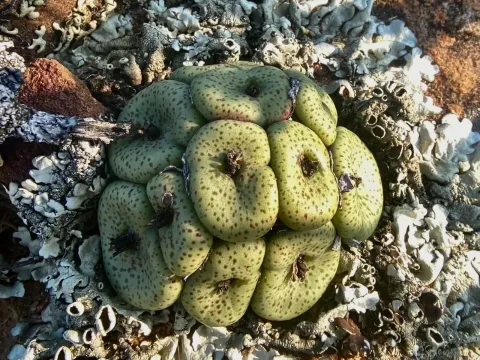
Conophytum
Conophytum
Conophytum is a genus of small, compact succulent plants belonging to the Aizoaceae family. These plants are native to the arid regions of Southern Africa and Namibia, where they have evolved to withstand prolonged dry seasons.
What the section contains
 Conophytum brunneum
Conophytum brunneum
Conophytum brunneum
 Conophytum calculus
Conophytum calculus
Conophytum calculus
 Conophytum flavum
Conophytum flavum
Conophytum flavum
 Conophytum friedrichiae
Conophytum friedrichiae
Conophytum friedrichiae
 Conophytum gratum
Conophytum gratum
Conophytum gratum
 Conophytum herreanthus
Conophytum herreanthus
Conophytum herreanthus
 Conophytum longum
Conophytum longum
Conophytum longum
 Conophytum lydiae
Conophytum lydiae
Conophytum lydiae
 Conophytum meyeri
Conophytum meyeri
Conophytum meyeri
 Conophytum minimum
Conophytum minimum
Conophytum minimum
 Conophytum minutum
Conophytum minutum
Conophytum minutum
 Conophytum praesectum
Conophytum praesectum
Conophytum praesectum
 Conophytum quaesitum
Conophytum quaesitum
Conophytum quaesitum
 Conophytum subfenestratum
Conophytum subfenestratum
Conophytum subfenestratum
 Conophytum taylorianum
Conophytum taylorianum
Conophytum taylorianum
Conophytum
Successful cultivation requires a highly porous and well-draining substrate. Growers typically use a mix of coarse sand, pumice, and grit, ensuring that organic matter remains at a bare minimum to avoid root rot issues.
The plants thrive in bright, filtered light. While they can tolerate some direct sun, high intensity during the hottest parts of the day can cause severe scorching of the succulent bodies, necessitating shading in greenhouse environments.
Temperature control is crucial, as Conophytum species undergo a distinct seasonal growth cycle. They require a cool, dry dormant period during the summer months and a period of active growth during cooler temperatures.
Irrigation must be synchronized with the plant's growth cycle. Watering should be increased when the plant begins to show signs of activity and strictly withheld during dormancy to replicate their natural habitat conditions.
Root mealybugs are the primary pest affecting Conophytum. These insects are often found deep within the soil or between the fused leaves, requiring systemic insecticides for effective control.
Red spider mites can cause significant damage to the epidermis of the plant, often resulting in unsightly scarring that reduces the overall commercial value of the specimen.
Rot-inducing fungi represent a major threat, particularly when humidity levels are too high or when there is insufficient air circulation around the plants during the dormant phase.
Preventative measures are essential, including maintaining proper spacing between pots to ensure good airflow and conducting regular inspections for any signs of infection or infestation.
When pests are detected, the use of targeted chemical treatments is recommended, though growers must be careful as some delicate succulent tissues can be sensitive to specific solvents in insecticides.