
Conophytum subfenestratum
Conophytum subfenestratum
Description
Growing requirements
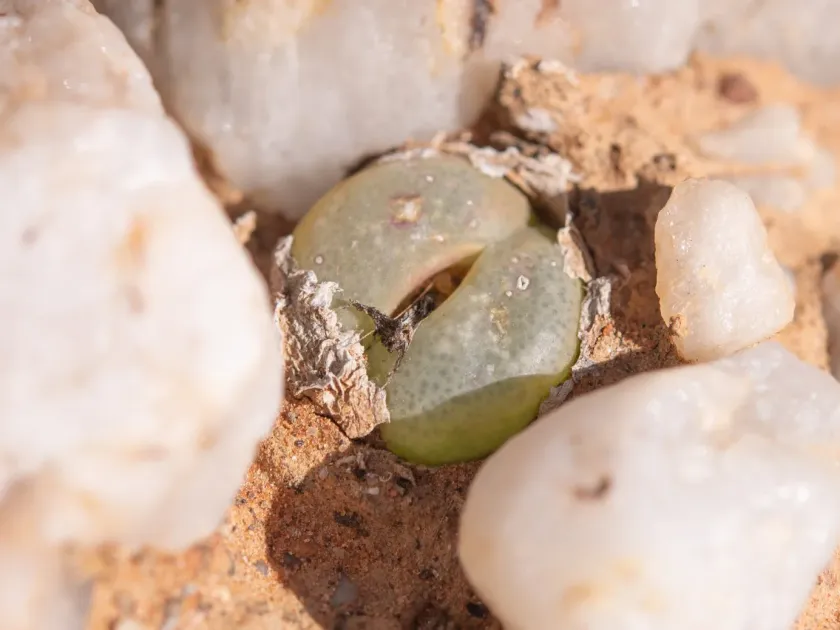
Conophytum subfenestratum is a small, specialized succulent belonging to the Aizoaceae family, native to the arid environments of South Africa. The plant is botanically recognized for its distinct body shape, composed of fused leaves that feature a semi-translucent window, allowing light to reach the internal photosynthetic tissue.
The cultivation of this species requires a specific environment that mimics its natural habitat. A bright, diffused light source is essential; while the plants require significant light to maintain their compact form, excessive direct exposure during the summer months can lead to physiological stress and scorching of the epidermis.
Soil requirements are strict: the substrate must be highly mineral-based and possess excellent drainage properties. A mix comprising coarse sand, crushed volcanic rock, and a minimal amount of organic substrate is recommended to prevent water retention and root asphyxiation during the dormant cycle.
Temperature management plays a critical role in the crop's development. Conophytum subfenestratum grows during the cooler, humid months and enters dormancy during the high-temperature summer season. Providing a seasonal variation in temperature helps the plant maintain its natural biological rhythm and healthy growth cycle.
In terms of agricultural and horticultural utility, this plant is primarily used as an ornamental specimen in botanical collections and private greenhouses. Due to its unique morphology and slow growth rate, it is highly sought after by succulent enthusiasts and professional nurseries specializing in rare flora.
Main diseases and pests
The most significant threats to the health of this culture are fungal and bacterial rots, primarily induced by improper irrigation practices or poor aeration in the growing area. Over-watering during the plant's dormant phase often leads to rapid decay of the entire body.
Common succulent pests, including mealybugs and spider mites, pose a persistent threat. These insects often colonize the junction between the leaf pairs, making them difficult to detect without careful inspection. Implementing an integrated pest management approach is vital for the longevity of the specimens.