
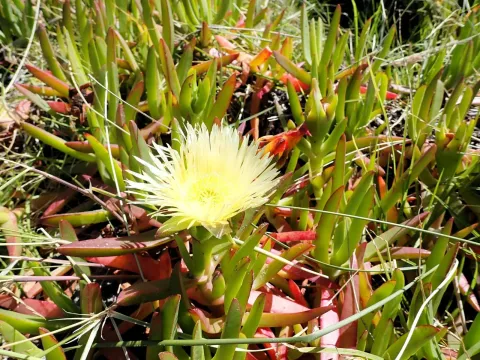
Carpobrotus
Carpobrotus
Carpobrotus is a genus of succulent plants within the Aizoaceae family, widely recognized for its robust, creeping growth habit. Native to Southern Africa, these plants have naturalized in various coastal regions of Australia, South America, and the Mediterranean.
What the section contains


Carpobrotus
The culture thrives in well-drained, sandy, or rocky soils, demonstrating high tolerance to salinity and low nutrient content. It is an ideal plant for xeriscaping as it requires minimal soil preparation to establish a dense mat of vegetation.
Climatic requirements for Carpobrotus center on full sunlight and warmth. It is highly sensitive to severe frost and damp, humid conditions, which significantly limit its geographic range in colder latitudes unless grown in containers.
Agronomic management involves periodic pruning to control its vigorous expansion and ensuring the soil remains dry between waterings. Fertilization is generally not required, as excess nitrogen can lead to succulent tissue weakness and susceptibility to rot.
Its primary agricultural and landscape application is the stabilization of sand dunes and embankment slopes to mitigate soil erosion. Additionally, the plant produces edible fruits in some species, occasionally harvested for local culinary use.
Fungal pathogens are the most significant threat to Carpobrotus, particularly those causing root and stem rot. These occur predominantly when the soil moisture levels exceed the plant's capacity to process water through its succulent tissues.
Mealybugs are the most common insect pests, often colonizing the crevices of the fleshy leaves. These pests are difficult to eradicate once established, requiring targeted systemic insecticide applications to protect the plant.
Spider mites represent a recurring problem, especially in dry, enclosed environments such as greenhouses or during prolonged periods of drought. Their presence is indicated by stippling on the leaf surfaces, necessitating prompt acaricidal treatment.
Invasive weed competition during the establishment phase can stunt the growth of Carpobrotus. Regular weeding is necessary until the plant forms a thick, carpet-like cover that naturally suppresses other vegetation.
Maintaining proper airflow within dense plantings is essential to prevent microclimates that encourage disease development. Strategic pruning helps to invigorate the plant and remove old, decaying material.