
Conophytum minutum
Conophytum minutum
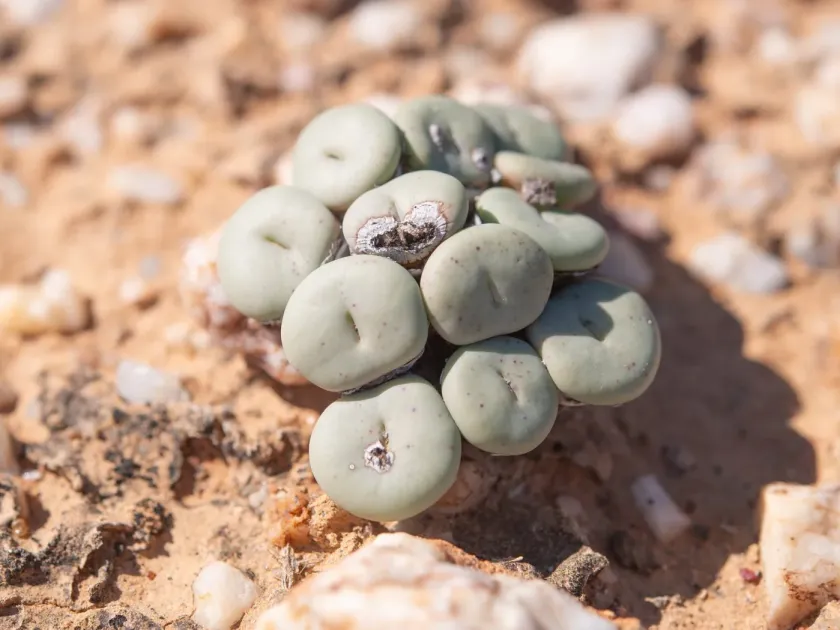
Description
Sowing dates
Propagation of Conophytum minutum is typically performed by seeds sown during early spring when day length begins to increase. Seeds are placed on top of a mineral substrate without being buried.
A transparent cover is used to maintain high humidity levels during the germination phase. The temperature should be kept between 20 and 22 degrees Celsius for optimal sprouting.
Seedlings emerge after two weeks, at which point the cover is gradually removed to acclimate the plants. Excess moisture during this time is the most common cause of seedling mortality.
Transplanting (pricking out) should only be done once the plants are at least one year old to ensure the root system is developed enough to survive the transition to a new pot.
Commercial producers sometimes use division of larger clumps to propagate mature plants. This ensures uniformity and preserves specific genetic characteristics of the parent plant.
Growing requirements
Conophytum minutum belongs to the Aizoaceae family, naturally occurring in arid regions of Southern Africa. These plants have evolved to withstand intense drought and high heat.
Successful cultivation requires a gritty, inorganic soil mixture. A composition of coarse sand, pumice, and grit is essential to ensure that water drains away from the roots immediately.
Bright, diffused light is crucial for the plant to maintain its compact shape. Direct midday sun in summer can cause severe burns, so it should be avoided or diffused with curtains.
Watering must be strictly seasonal. Plants should be watered only when the soil has dried out completely. During the summer dormancy period, water should be withheld entirely.
Winter maintenance requires cool temperatures between 10 and 15 degrees Celsius. This period of rest is vital for the development of new leaves and subsequent late-season flowering.
Main diseases and pests
Root rot is the primary danger for this species, caused by waterlogged soil. Once the rot enters the stem, the plant rarely recovers, leading to complete structural failure.
Mealybugs are frequent pests, hiding in the crevices between the leaves. Regular inspection and targeted application of systemic insecticides are necessary to control these infestations.
Spider mites can become problematic if the indoor environment is too dry and lacking airflow. They cause discoloration on the skin of the plant, significantly reducing its aesthetic value.
Root mealybugs can infest the soil undetected. To prevent this, it is recommended to sterilize all potting media and use only clean, porous ceramic pots for cultivation.
Maintaining a clean collection is the best prevention. Quarantine any new plants before introducing them to the group to avoid the spread of pests and fungal pathogens.