
Conophytum brunneum
Conophytum brunneum
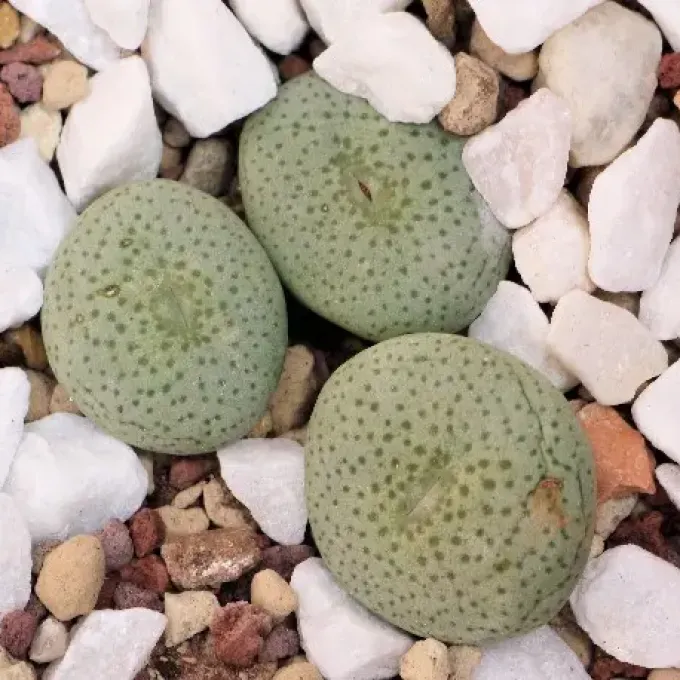
Description
Growing requirements
Conophytum brunneum is a highly specialized succulent species belonging to the Aizoaceae family. It is recognized for its unique morphological structure and its ability to thrive in the harsh, arid environments characteristic of the South African desert regions.
Native to the Northern Cape Province in South Africa, this species primarily inhabits rock crevices where it grows in shallow, mineral-rich deposits. This natural habitat defines its compact growth habit and extreme resilience to drought.
Botanically, the plant consists of two fused leaves that form a single, succulent body. The surface of Conophytum brunneum is often noted for its distinct brownish tint, which serves as a protective mechanism against intense solar radiation in its native habitat.
Cultivation requires a highly porous, inorganic growing medium. A blend consisting primarily of pumice, coarse sand, and crushed granite is ideal for preventing root rot and simulating natural growing conditions found in crevices.
The agrotechnical management of this plant is strictly seasonal. The species exhibits a dormant phase during the hot summer months, during which irrigation must be entirely withheld. Growth activity occurs in autumn and winter, necessitating careful water management during these cooler periods.
Main diseases and pests
The most significant threat to the health of the plant is overwatering, which quickly leads to the disintegration of the delicate root system. In humid environments, the risk of fungal decay increases exponentially, necessitating improved air circulation.
Root mealybugs are the primary pest concern for this species. Because they reside within the root zone or between the fused leaf gaps, they can be difficult to detect until the plant begins to show signs of decline, such as shriveling or discoloration.
Red spider mites are occasionally encountered, particularly when the atmosphere is excessively dry and stagnant. These pests feed on the succulent's surface, causing unsightly lesions that can compromise the plant's ability to photosynthesize effectively.
Bacterial soft rot can occur if the plant is mechanically injured and then exposed to high moisture levels. Any physical damage to the epidermis must be allowed to callus over completely before the plant is exposed to any humidity.
Preventive care involves regular inspection of the base of the plant and maintaining a strict, dry-cycle regimen during summer dormancy to ensure the plant remains robust against potential opportunistic pathogens.