
Conophytum taylorianum
Conophytum taylorianum
Description
Sowing dates
Propagation of this culture is most often carried out by seeds, as the division of mature clumps can be difficult due to their fragility. Sowing is usually performed in late winter or early spring to ensure the young seedlings gain strength before the hot season arrives.
For successful germination, it is necessary to use a sterile, fine-grained substrate with a high sand content. The soil surface must be kept slightly moist, and the seed trays should be covered with glass or transparent plastic to maintain stable humidity levels.
The temperature during germination should be maintained between 20 and 22 degrees Celsius. It is vital to provide diffused lighting, avoiding direct sunlight on the delicate seedlings to prevent scorching and rapid dehydration.
Pricking out the young plants should only be done once they have reached a sufficient size and formed their first pair of true leaves. Transplanting requires extreme caution, as the root system of this succulent is highly sensitive to any mechanical damage.
Watering of seedlings in their first year must be moderate but consistent, which differs from the care of adult plants. As the plants mature, the watering schedule should gradually shift to the cycle of dormancy and active growth characteristic of their natural habitat.
Growing requirements
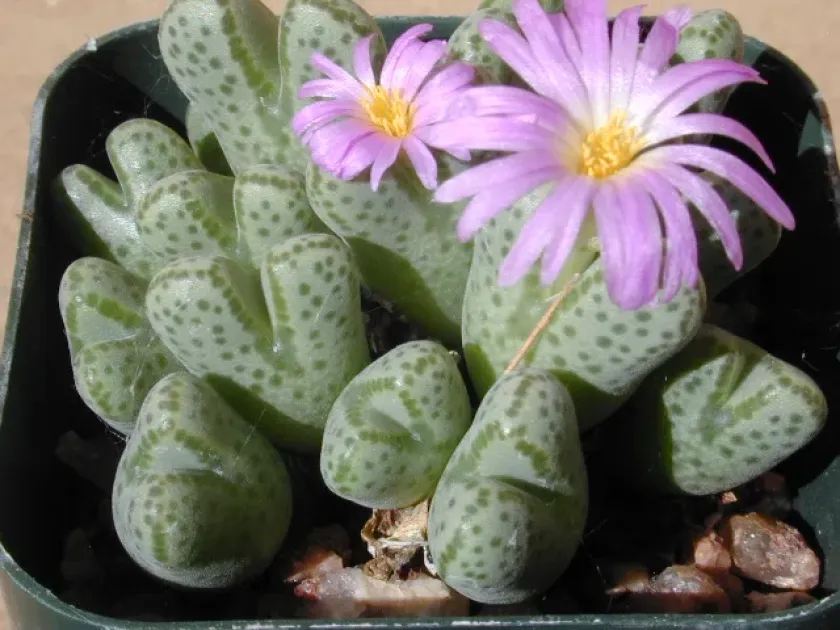
Conophytum taylorianum is a dwarf succulent from the Aizoaceae family, native to the arid regions of Southern Africa. The plant is characterized by fused, fleshy leaves that form compact bodies, which renew themselves on an annual cycle.
Lighting is a critical factor for this species: the culture requires maximum direct light during its active growing season. A lack of sunlight leads to etiolation, where the plant stretches and loses its natural shape, making it vulnerable to various physiological disorders.
Requirements for the growing medium include excellent drainage and a mineral-based substrate. An ideal mixture consists of loam, coarse sand, and perlite, with organic matter kept to a minimum to prevent moisture stagnation around the roots.
Climatic conditions must strictly follow the seasonal cycle: in summer, the plant enters a state of deep dormancy, during which watering is almost entirely ceased. Active growth begins in autumn as temperatures drop and day length shortens, mimicking its native environment.
Air humidity should be kept low, as excessive moisture can trigger rot in the leaf tissues. Proper ventilation in the growing area or greenhouse is mandatory to maintain the health of this culture throughout the entire year.
Main diseases and pests
The primary threat to Conophytum species is root and stem rot caused by substrate overwatering. The first sign of the disease is tissue softening, which spreads rapidly throughout the plant if emergency corrective measures are not taken immediately.
Among the pests, mealybugs are the most common, often attacking the hidden crevices between the leaf bodies. Their presence can be identified by the characteristic white, cotton-like waxy deposits they leave behind.
Root mealybugs can also pose a significant threat, especially if the substrate remains moist and poorly aerated for extended periods. This pest drains sap from the roots, leading to a sudden halt in growth and the degradation of the plant's overall appearance.
To control these pests, the use of systemic insecticides is recommended, as they effectively treat insects hiding in hard-to-reach areas. Contact-based treatments are often less effective due to the specific morphology of the plant's body.
Disease prevention is based on strictly adhering to watering standards and ensuring high-quality air circulation. Regular inspection of the plants allows for the timely identification of infested areas and the isolation of sick specimens from healthy ones.