
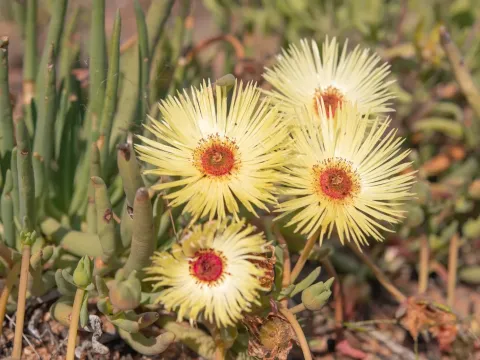
Cephalophyllum
Cephalophyllum
Cephalophyllum is a genus of succulent plants belonging to the Aizoaceae family. Native to the arid regions of Southern Africa, these plants have evolved to thrive in environments with extremely low and irregular rainfall patterns.
What the section contains


Cephalophyllum
Botanically, the plant is characterized by its trailing growth habit and succulent, triangular leaves. These leaves act as water storage organs, allowing the plant to maintain turgidity during prolonged drought periods.
The culture requires highly permeable, sandy, or rocky soils with excellent drainage properties. Soils that retain moisture for too long will inevitably lead to root rot and loss of the plant population.
Sunlight is the primary environmental requirement for Cephalophyllum. It necessitates full sun exposure for several hours daily to maintain its structural integrity and encourage the production of its vibrant flowers.
Regarding climate, the plant is best suited for zones with mild winters. While it can withstand short periods of cold, prolonged frost will damage its cellular structure and kill the plant.
Fungal pathogens are the most significant threat to this culture, particularly those that thrive in humid and poorly ventilated conditions. Root rot caused by overwatering remains the primary cause of crop failure.
Mealybugs are the most persistent pests affecting Cephalophyllum. They settle in the tight spaces between leaves, making them difficult to detect and eradicate without thorough manual or chemical intervention.
Spider mites can also become a problem in hot, dry environments. They cause stippling on the leaves, which eventually leads to the tissue turning brown and dying if left untreated.
Cultural practices such as proper spacing and strict irrigation schedules are essential for pest management. Ensuring that the surface of the soil dries out completely between waterings is a critical preventative measure.
Integrated Pest Management (IPM) should prioritize physical removal of pests followed by targeted application of mild systemic insecticides to minimize the risk of phytotoxicity to the succulent tissues.