
Conophytum meyeri
Conophytum meyeri
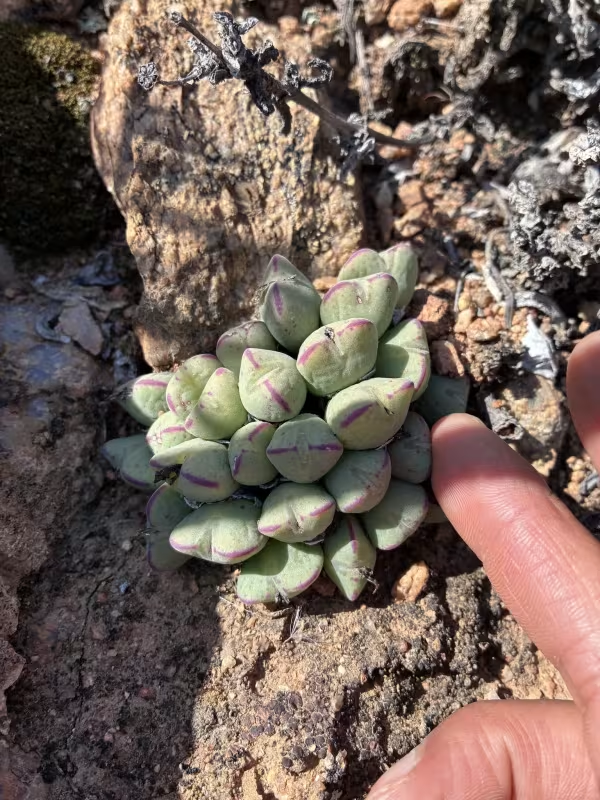
Description
Sowing dates
Conophytum meyeri belongs to the Aizoaceae family and is recognized as a highly specialized succulent that mimics its stony environment.
The propagation of this culture is primarily performed through seeds, which require specific preparation and environmental control to germinate.
Sowing should take place in a sandy, well-draining mineral substrate, spreading seeds on the surface without deep burial.
Maintenance of high humidity during the initial germination phase is critical, often achieved by covering the seed trays with glass or plastic.
Gradual acclimatization of seedlings to lower humidity is essential to prevent developmental setbacks once the first leaves emerge.
Growing requirements
The plant originates from arid regions in Southern Africa, which dictates its specific requirement for distinct seasonal cycles.
Successful cultivation depends on highly porous soil mixes, typically consisting of coarse sand, pumice, and minimal peat or humus.
A crucial agronomic aspect is the summer dormancy period; watering must be halted entirely while the plant undergoes its natural leaf cycle.
High intensity light is required for the plant to maintain its compact shape, although direct midday sun in summer should be avoided.
Temperature management should mimic desert fluctuations: warm days and significantly cooler nights to stimulate metabolic processes.
Main diseases and pests
Overwatering is the primary threat to Conophytum meyeri, causing rapid tissue collapse and root rot that can be irreversible.
Mealybugs are the most common pest, as they can easily hide within the fissures of the succulent leaves, making them difficult to detect.
Red spider mites may attack the plant if the ambient humidity remains consistently too low and ventilation is inadequate.
Fungal infections can occur if stagnant air or excessive moisture creates an environment conducive to pathogen growth.
- Use of systemic insecticides for pest control
- Strict avoidance of winter and summer watering
- Regular monitoring for signs of rot or insect presence