
Conophytum lydiae
Conophytum lydiae
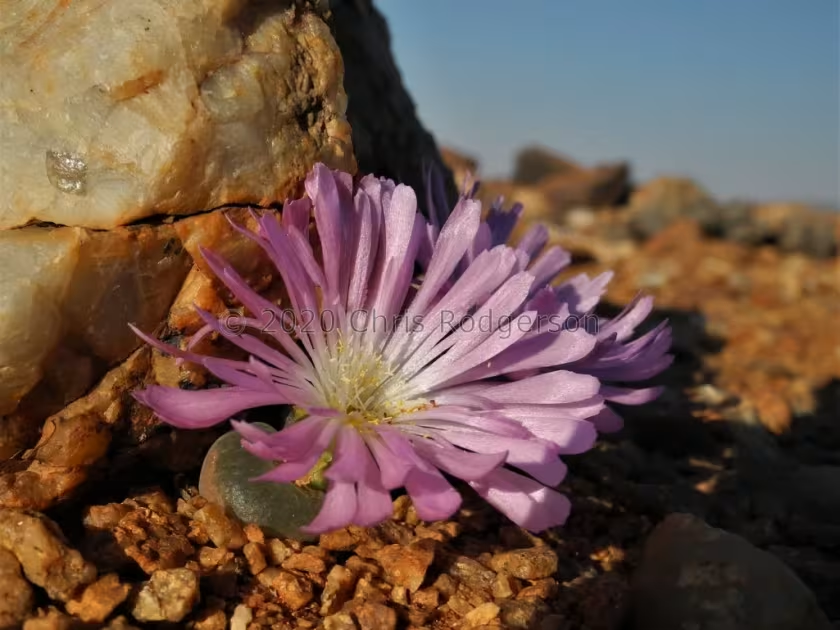
Description
Growing requirements
Conophytum lydiae is a dwarf succulent belonging to the Aizoaceae family, native to the arid regions of Southern Africa. This plant is well-known for its adaptation to harsh, dry climates, where it grows in rocky crevices and gravel plains.
The morphology of the plant is characterized by fused leaves forming a small, cushion-like body with a narrow fissure at the top. During its dormancy phase, the old leaf pair dries out into a papery, protective sheath that shields the developing new growth from intense heat and excessive solar radiation.
Cultivation requirements demand high solar exposure, though shading is necessary during the most intense peak hours of summer. A highly permeable, mineral-based soil mix—consisting primarily of coarse sand, perlite, and volcanic grit—is essential to prevent moisture retention and subsequent rot.
Climate management should focus on distinct seasonal cycles, mimicking the natural drought and rainy periods of the Succulent Karoo biome. Irrigation must be strictly withheld during the dormancy period to ensure the plant remains in a healthy, compact state and to trigger proper blooming cycles.
The horticultural utility of Conophytum lydiae is predominantly centered on specialized succulent collections and botanical research. Its diminutive size and geometric, stone-like aesthetic make it a highly sought-after species for collectors of rare and unusual ornamental desert flora.
Main diseases and pests
The primary threats include root rot and stem decay, which are almost exclusively caused by overwatering or poor drainage. Excess humidity, particularly in the winter months, can quickly lead to lethal bacterial and fungal infections.
Common pests include the mealybug, which tends to reside in the central fissure, and spider mites. Proactive pest management involves regular observation and maintaining optimal airflow, which helps to mitigate the risk of infestations in greenhouse or indoor environments.