
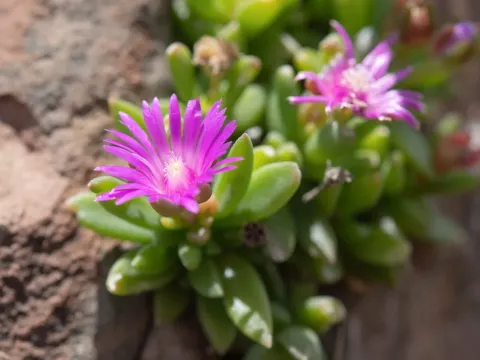
Delosperma
Delosperma N. E. Br.
Propagation of Delosperma is mainly carried out by seeds or stem cuttings, which allows for rapid multiplication of the planting material.
What the section contains


Delosperma
Sowing seeds in temperate climates is best performed in late winter or early spring, typically between February and March, to ensure timely establishment.
The seeds are extremely fine, so they should be surface-sown on moist substrate without covering them, and kept under glass to create a greenhouse effect.
Optimal temperatures for successful germination should be maintained between 20–25 degrees Celsius, with constant access to bright, indirect light.
Pricking out the seedlings occurs once the first pair of true leaves appears, moving them into individual pots containing a well-draining soil mix.
Delosperma belongs to the Aizoaceae family and is a perennial succulent plant native to the arid regions of Southern Africa.
For healthy development, this crop requires open, sunny locations, as shaded conditions lead to etiolated, leggy stems and reduced aesthetic value.
The plant has specific soil preferences, requiring excellent drainage and a light, porous substrate to thrive throughout the growing season.
While the crop is highly drought-tolerant, it requires moderate watering during the active flowering phase, ensuring no moisture accumulates near the crown.
Winter hardiness varies among species, so in colder regions, plants should be protected with a layer of mulch, pine boughs, or dry leaves.
The horticultural use of Delosperma is focused on creating decorative ground cover in landscape design rather than producing agricultural yield.
It is highly valued for its ability to form dense, spreading mats, making it an ideal choice for rock gardens, alpine beds, and retaining walls.
Flowering intensity is directly correlated with maintenance standards: when properly managed, the plant produces a carpet of vivid, colorful blooms.
The crop is frequently utilized in urban landscaping as a low-maintenance ground cover that persists even in poor, rocky soil conditions.
In regions with suitable climates, Delosperma serves as a popular container plant for patios, balconies, and sunny courtyards.
The primary threat to Delosperma health is excessive soil moisture, which inevitably leads to root rot and fungal decay of the succulent stems.
Stagnant water can trigger fungal infections on the leaves and stems, requiring immediate pruning of affected areas and the application of fungicides.
When grown in protected environments or greenhouses, the plants may become susceptible to mealybugs, which feed on the plant's sap.
To effectively manage pest populations, systemic insecticides should be utilized as soon as an infestation is detected to prevent systemic damage.
- Strict adherence to irrigation schedules.
- Utilization of sterile growing media.
- Ensuring adequate air circulation.
- Regular removal of necrotic tissue.
- Proactive treatment with biological controls.