
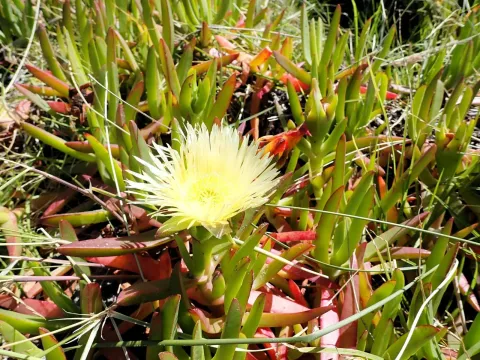
Carpobrotus
Carpobrotus N. E. Br.
Carpobrotus is a genus of trailing succulent plants belonging to the Aizoaceae family. Originally native to South Africa, these plants have naturalized in various warm regions globally due to their remarkable resilience.
What the section contains

Carpobrotus
The culture thrives in sandy, well-draining soils and is highly tolerant of saline conditions, making it an excellent choice for coastal landscape restoration. Full sun exposure is essential for maintaining plant vigor and promoting abundant flowering.
Climatically, Carpobrotus prefers Mediterranean-type climates with mild winters and hot, dry summers. It does not possess high cold tolerance and requires protection or indoor storage in regions experiencing frequent freezing temperatures.
Agronomic management focuses on preventing waterlogging, as the fleshy leaves are prone to rot under stagnant moisture conditions. Propagation is most efficiently achieved through stem cuttings placed directly into a dry, porous rooting medium.
Economically and environmentally, the plant is widely utilized for erosion control on slopes and dunes. Its dense growth pattern serves as a living mulch that stabilizes soil and retains moisture for the underlying ground.
Fungal diseases are the primary threat to Carpobrotus health, typically exacerbated by poor soil drainage and high humidity levels. Root rot and leaf spot are common issues in improperly managed garden beds.
Insect pests, including mealybugs and spider mites, occasionally infest the plants, particularly in glasshouse environments or during prolonged droughts. Regular monitoring and physical removal or organic soaps are often sufficient for control.