

Description
Symptoms
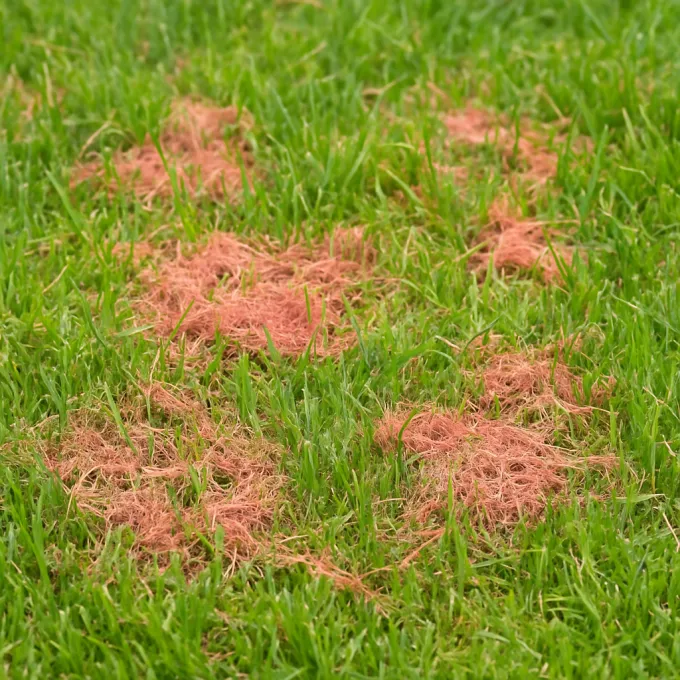
Initial symptoms include the appearance of irregular, water-soaked patches on the leaves that eventually turn a bleached tan or straw color as the tissue dies.
The most diagnostic feature is the presence of bright pink or red thread-like stroma that grow from the leaf tips, giving the affected areas a reddish cast.
Under conditions of high humidity or morning dew, a fine, pink, web-like mycelium can be observed covering the infected spots on the grass surface.
As the disease progresses, these patches can expand and merge, creating large, ragged, straw-colored areas that significantly reduce the lawn's aesthetic value.
Unlike some other fungal diseases, red thread tends to be more localized on the tips of the grass blades, though severe outbreaks can affect the entire plant.
Pathogen
The causative agent of the disease is the fungus Laetisaria fuciformis, a basidiomycete that thrives on various turfgrass species across different climate zones.
This pathogen specifically attacks the leaf blades of grasses, colonizing the epidermal tissues but rarely causing systemic infections within the root system.
The fungus survives during unfavorable periods as dormant mycelium or sclerotia-like structures within the organic matter or thatch layer of the turfgrass.
During its active phase, the fungus produces distinctive gelatinous, pinkish-red strands or needles known as stroma, which protrude from the leaf tips.
Dispersal occurs primarily through mechanical transfer via mowing equipment, foot traffic, or by water splashing, spreading fungal fragments to healthy grass blades.
Conditions for development
Red thread development is strongly linked to cool, moist conditions, with temperatures ranging from 15°C to 25°C (60°F to 75°F) being optimal for fungal growth.
Extended periods of leaf wetness, such as slow-drying mornings or persistent rainy weather, are primary drivers for the infection process.
Nitrogen deficiency is the most significant predisposing factor; lawns that are under-fertilized are much more susceptible to severe red thread infestations.
Poor air circulation and excessive thatch buildup create a microclimate that prevents the turf from drying out, facilitating the fungus's ability to infect.
Over-irrigation in the late afternoon or evening is highly counterproductive, as it keeps the leaf surface moist for extended periods during the night.
Why it matters
The primary concern is the significant aesthetic decline of turfgrass, which is particularly detrimental for golf courses, residential lawns, and public parks.
While the disease rarely kills the entire turf, it severely weakens the grass plants, reducing their vitality and competitive ability against weeds.
Infected lawns exhibit stunted growth and thinning of the stand, which can take weeks to recover even after the environmental conditions become unfavorable for the fungus.
Repeated or severe infections can lead to a long-term decline in turf density, necessitating costly renovations or overseeding programs.
Weakened grass is significantly more vulnerable to secondary infections from other pathogens, potentially leading to a broader lawn health crisis.
Protection
The most important cultural practice is maintaining balanced fertilization, especially ensuring adequate nitrogen levels to promote steady growth and recovery.
Regular aeration and scarification help manage thatch buildup and improve drainage, ensuring that moisture does not remain on the leaves for long periods.
Watering should be performed early in the day to allow the grass blades to dry completely under the sun, which naturally inhibits fungal spore germination.
If cultural controls are insufficient, systemic fungicides containing active ingredients like azoxystrobin or propiconazole can be used to stop the spread of infection.
Cleaning mowing equipment after working on infected areas is crucial to prevent the accidental spread of the fungus to healthy parts of the lawn.
Content graph
Connections · Red thread
Most often together:
Marketplace
Products · 47






Community
Discussion
No discussions yet — be the first.