
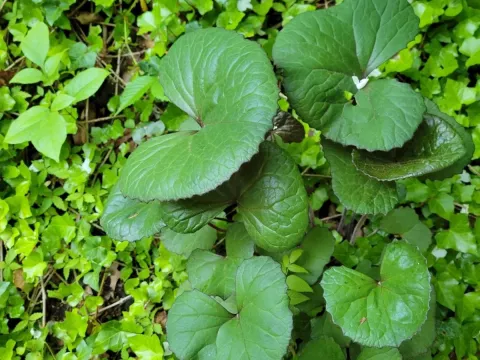
Ligularia
Ligularia
Ligularia, a member of the Asteraceae family, is a genus of herbaceous perennial plants native to damp environments in Asia and Europe. These plants are prized by gardeners for their bold, heart-shaped foliage and striking, spike-like or corymbose flower heads that emerge in shades of golden yellow or orange.
What the section contains
 Big-leaved ligularia
Ligularia macrophylla
Big-leaved ligularia
Ligularia macrophylla
 Hybrid Ligularia
Ligularia hybrids
Hybrid Ligularia
Ligularia hybrids
 Japanese ligularia
Ligularia japonica
Japanese ligularia
Ligularia japonica
 Ligularia amplexicaulis
Ligularia amplexicaulis
Ligularia amplexicaulis
 Ligularia bucovinensis
Ligularia carpatica
Ligularia carpatica
Ligularia bucovinensis
Ligularia bucovinensis
Ligularia carpatica
Ligularia carpatica
 Ligularia intermedia
Ligularia intermedia
Ligularia intermedia
 Ligularia jaluensis
Ligularia jaluensis
Ligularia jaluensis
 Ligularia jamesii
Ligularia jamesii
Ligularia jamesii
 Ligularia narynensis
Ligularia narynensis
Ligularia narynensis
 Ligularia schmidtii
Ligularia schmidtii
Ligularia schmidtii
 Ligularia veitchiana
Ligularia veitchiana
Ligularia veitchiana
 Mongolian leopard plant
Ligularia mongolica
Mongolian leopard plant
Ligularia mongolica
 Siberian ligularia
Ligularia sibirica
Siberian ligularia
Ligularia sibirica
 Wilson's Leopard Plant
Ligularia wilsoniana
Wilson's Leopard Plant
Ligularia wilsoniana
Ligularia
Botanically, these plants are robust perennials that thrive in environments where moisture is abundant. They are typically found growing along stream banks, in marshy meadows, and in deep, nutrient-rich soils that provide a steady supply of moisture during the peak of the growing season.
The primary environmental requirement for Ligularia is consistent moisture and shade. They perform best in partial to full shade, as they are susceptible to leaf scorch and wilting when exposed to intense afternoon sunlight. Soil should be rich in organic matter, loamy, and consistently damp to prevent physiological stress.
Cultivation practices focus on maintaining soil hydration and providing adequate nutrition. Incorporating compost into the soil during planting provides a base of nutrients, while consistent mulching is essential to retain soil moisture and keep the root zone cool, mimicking the plant's natural woodland habitat.
Propagation is most efficiently achieved through division of the root clump in early spring as new growth begins. Dividing the plants every three to four years helps maintain vigor and allows for the removal of older, woody sections of the rootstock, ensuring the plant remains healthy and produces vibrant blooms.
Slugs and snails are the most significant pests for Ligularia, as they are attracted to the tender, lush foliage. Gardeners often employ physical barriers like copper tape or crushed eggshells, or use organic slug baits to protect the leaves from becoming riddled with unsightly holes during the growing season.
Powdery mildew is the most common fungal disease, typically appearing during warm, humid weather or in areas with poor airflow. It manifests as a white, dusty coating on the leaf surfaces, which can be managed by improving spacing between plants and applying appropriate organic fungicides when symptoms appear.
Crown rot can occur if the soil is poorly drained or if the crown of the plant remains submerged in water for extended periods. To prevent this, ensure that the planting site has good soil structure and avoid heavy clay soils that do not allow for adequate water movement away from the root system.
Regular sanitation, such as removing fallen debris and dead foliage, helps reduce the habitat for pests and potential fungal spores. Keeping the area clean around the plant base is a simple yet effective strategy to maintain the overall health and vigor of the Ligularia clump throughout the year.
While pests and diseases can occur, a healthy Ligularia established in the right location is generally resilient. Providing the correct balance of shade and water is the most critical factor in ensuring that the plant stays vigorous and less susceptible to the various threats found in the home garden.