
Wilson's Leopard Plant
Ligularia wilsoniana
Description
Growing requirements
Wilson's Leopard Plant (Ligularia wilsoniana) is a striking perennial herb belonging to the Asteraceae family. Native to the mountainous regions of China, this plant is highly valued in horticulture for its impressive stature and architectural foliage.
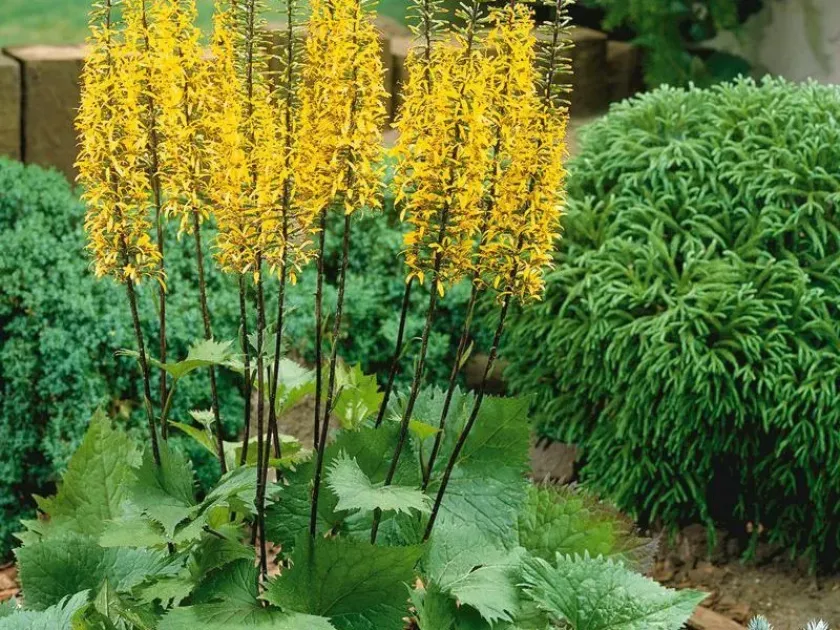
Botanically, it is distinguished by large, heart-shaped leaves and tall, vertical racemes of golden-yellow flowers that can reach heights of 1.5 meters. The inflorescences emerge in late summer, providing a significant visual focal point in landscape designs.
The cultural requirements are strictly linked to its natural habitat, favoring cool, semi-shaded environments with consistent moisture. It is particularly well-suited for moist garden borders, woodland areas, or the edges of water features where it can thrive.
Success in cultivation depends on providing humus-rich, fertile, and water-retentive soils. Heavy, moisture-retaining soil textures are far superior to light or sandy ones, which can lead to rapid wilting during the peak of the summer heat.
Agrotechnical maintenance involves essential irrigation during dry spells to maintain the turgidity of the lush foliage. Additionally, applying organic mulch around the base of the plant helps to conserve moisture and suppress competing weed growth.
Main diseases and pests
The primary pest affecting Ligularia wilsoniana is the slug or snail, which can cause severe aesthetic damage to the leaves. Effective management strategies include manual removal or the use of eco-friendly molluscicide barriers around the planting site.
Fungal issues, specifically powdery mildew, may occur if the plant is subjected to poor air circulation or stressed by drought. Proper plant spacing and avoiding overhead watering during humid periods are critical preventative measures for plant health.