
Leucophyta
Leucophyta R. Br.
Leucophyta, commonly known as Leucophyta brownii or cushion bush, belongs to the Asteraceae family. This ornamental shrub is native to the coastal regions of Australia, where it evolved to thrive in harsh, sandy, and wind-exposed environments.
What the section contains

Leucophyta
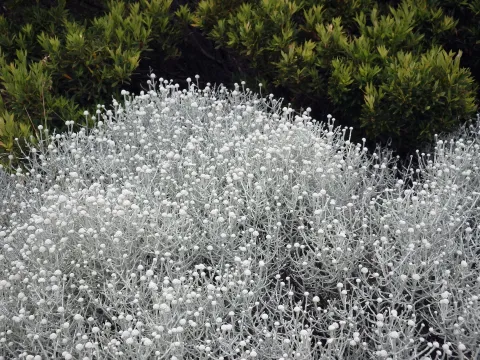
The plant is highly prized for its unique silver-white appearance, which is caused by a dense layer of fine hairs covering its stems and tiny scale-like leaves. It forms a compact, rounded mound that looks like a delicate, tangled coral structure.
For successful cultivation, Leucophyta requires full sun exposure and extremely well-drained, gritty soil. It is perfectly adapted to nutrient-poor soils and does not require heavy fertilization, as excess nutrients can weaken its natural resilience and compact form.
Water management is the most important aspect of its agrotechnology. The plant is drought-tolerant and sensitive to overwatering; therefore, it should only be watered when the growing medium has dried out completely to prevent root decay.
In temperate climates, it is typically grown as a decorative annual or in containers that can be moved indoors before freezing temperatures occur. It prefers an environment with good air circulation, which prevents the development of moisture-related issues.
The most significant threat to Leucophyta is root rot, primarily caused by overwatering or poor drainage. Excess moisture creates an environment where soil-borne pathogens can easily attack the plant's delicate root system.
Pests such as spider mites and mealybugs can infest the dense, tangled stems of the plant, especially in stagnant air conditions. Their presence is often identified by stunted growth and discoloration of the silver stems.
Fungal diseases like leaf spot and botrytis can occur during periods of high humidity or insufficient airflow. Proper spacing between plants and keeping the foliage dry are essential for preventing these types of infections.
Managing threats involves a proactive approach: prioritizing proper drainage and airflow over the use of heavy pesticides. If an infestation occurs, systemic insecticides should be applied carefully to ensure full coverage of the intricate branches.
Regular monitoring of the base of the plant is necessary to detect early signs of decay. Removing any debris or fallen organic matter from around the crown helps maintain a dry, healthy environment that discourages the growth of harmful fungi.