
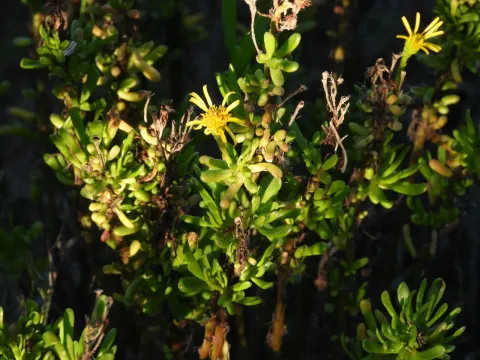
Limbarda
Limbarda
Sowing of Limbarda seeds should ideally take place in early spring, once the risk of frost has passed and the soil begins to warm up significantly.
What the section contains

Limbarda
The seeds are relatively small, so they should be sown on the surface of well-drained, sandy soil and lightly pressed down for better contact.
Optimal germination requires consistent moisture and bright light, as the seeds are light-sensitive and struggle to sprout in deep shade or darkness.
Propagation is typically performed in nursery trays before transplanting to the field to ensure that young plants establish a robust root system.
Strategic placement in the field should consider the plant's natural preference for coastal conditions, mimicking these in garden or field beds.
Limbarda is a member of the Asteraceae family, well-adapted to coastal saline environments where other conventional crops fail to survive.
The plant demands full sun exposure throughout its life cycle, which is crucial for the accumulation of essential oils and overall plant vigor.
Soil requirements focus on high aeration and salt tolerance, with a preference for loose, sandy substrates that prevent water stagnation.
While Limbarda is drought-tolerant, supplemental irrigation during extreme heatwaves can improve leaf quality and overall vegetative biomass.
Environmental conditions should mimic Mediterranean climates, characterized by mild winters and dry, warm summers for optimal performance.
Limbarda is notably resilient and generally resistant to common horticultural pests and diseases due to its chemical composition and natural habitat.
The primary concern for growers is fungal development, specifically root rot, which occurs if the soil drainage is inadequate or waterlogs persist.
Insect pests such as aphids might occasionally target the plants, particularly when grown in sheltered, non-coastal greenhouse environments.
To mitigate these risks, growers must prioritize airflow and moderate irrigation, avoiding the humid conditions that favor pathogen proliferation.
Weed management is vital during the early establishment phase, as the plant can be slow to grow and may be outcompeted by invasive weeds.
Harvesting of the foliage usually occurs throughout the growing season, typically before the plant enters its full flowering stage for better leaf quality.
Manual harvesting is common, where tender apical shoots and young leaves are plucked carefully to allow the plant to regenerate new growth.
The culinary and pharmaceutical value depends on the timing of the harvest, as the essential oil content varies throughout the development cycle.
After harvesting, the leaves should be processed immediately or kept in cool conditions to prevent wilting and maintain high moisture content.
Systematic pruning during harvest helps maintain the plant's structure and encourages denser, bushier growth for subsequent seasonal cuts.