
Ligularia bucovinensis
Ligularia bucovinensis
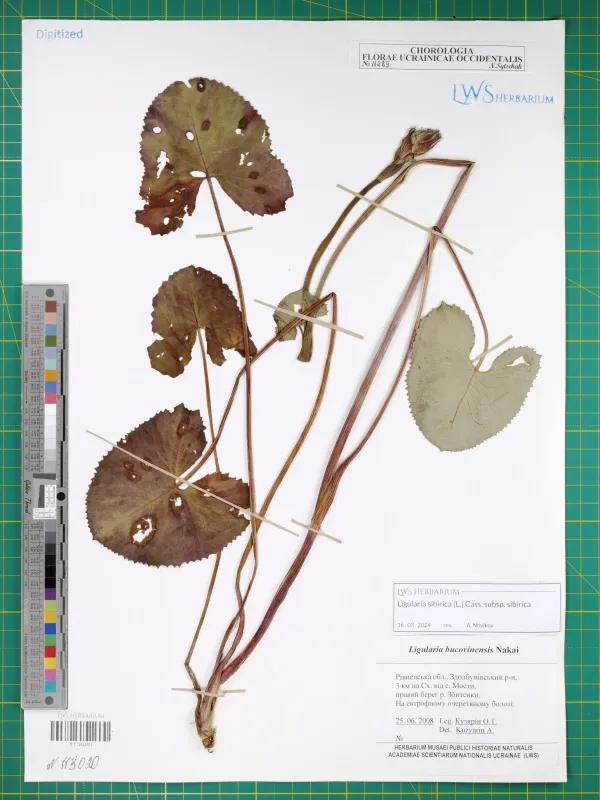
Description
Growing requirements
Ligularia bucovinensis is a perennial herb belonging to the Asteraceae family. Native to the Carpathian regions, this species is well-adapted to mountain environments, characterized by cool temperatures and significant precipitation levels throughout the growing season.
The plant thrives in partial shade, making it an excellent choice for woodland gardens or moist landscape sections. Direct sunlight should be avoided during the peak of the day to prevent leaf scorch, which is a common stress factor for this species in lower altitudes.
Soil requirements are quite specific; the plant demands rich, humus-laden, and moisture-retentive soil. A slightly acidic to neutral pH is optimal for nutrient uptake, and the soil structure should allow for consistent moisture without creating stagnant water zones.
Cultural maintenance involves frequent irrigation, as the plant is highly sensitive to drought. Wilting leaves are the first indicator of water stress, and providing consistent hydration is critical to maintaining the plant's structural integrity and aesthetic appeal.
Due to its high-altitude heritage, the plant exhibits strong cold hardiness. It generally requires minimal preparation for winter, as it is naturally programmed to undergo dormancy during freezing temperatures, making it a reliable perennial for colder climates.
Main diseases and pests
Slugs and snails are the most prominent pests for Ligularia bucovinensis, often causing significant foliage damage. Implementing integrated pest management strategies, such as physical barriers or environmentally safe baits, is necessary during periods of high humidity.
Fungal diseases, including powdery mildew, may affect the foliage if the air circulation around the plants is poor. Pruning overcrowded sections and ensuring proper spacing during initial planting are essential preventative measures against common horticultural pathogens.