
Ligularia schmidtii
Ligularia schmidtii
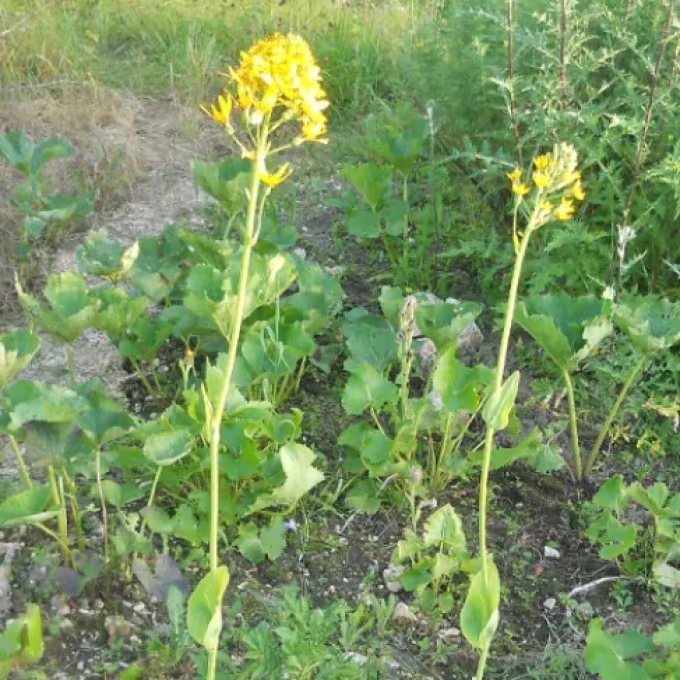
Description
Growing requirements
Ligularia schmidtii is a perennial herbaceous plant belonging to the Asteraceae family. This species is native to the Far East regions, including Japan and the Kuril Islands, where it thrives in damp, forested environments and riverbank ecosystems.
The plant is characterized by a compact habit with a basal rosette of large, heart-shaped leaves. Unlike some of its taller relatives, Ligularia schmidtii usually reaches a manageable height of 40 to 60 centimeters, making it an excellent choice for smaller landscapes.
This species requires consistently moist, fertile, and humus-rich soil to thrive. It is an ideal plant for rain gardens, bog gardens, or the edges of water features, as it cannot tolerate prolonged periods of drought or dry soil conditions.
The optimal planting site for this culture is in partial shade or dappled light. While it is highly shade-tolerant, it requires protection from the intense heat of the midday sun, which can cause significant wilting and scorching of the foliage.
Agronomic maintenance involves regular irrigation during dry spells and the application of organic mulch around the base to retain soil moisture. The plant is hardy and adapts well to cool climates, requiring little winter protection in most temperate regions.
Main diseases and pests
Slugs and snails are the most significant pests for Ligularia schmidtii, often feeding on the succulent foliage and leaving large, unsightly holes. Implementing barrier methods or baiting is essential to maintain the visual quality of the plant.
In high humidity and poor air circulation, the plant may occasionally suffer from powdery mildew. Proper spacing during planting and routine monitoring for fungal spots are recommended to keep the plant healthy throughout the growing season.