
Hybrid Ligularia
Ligularia hybrids
Description
Sowing dates
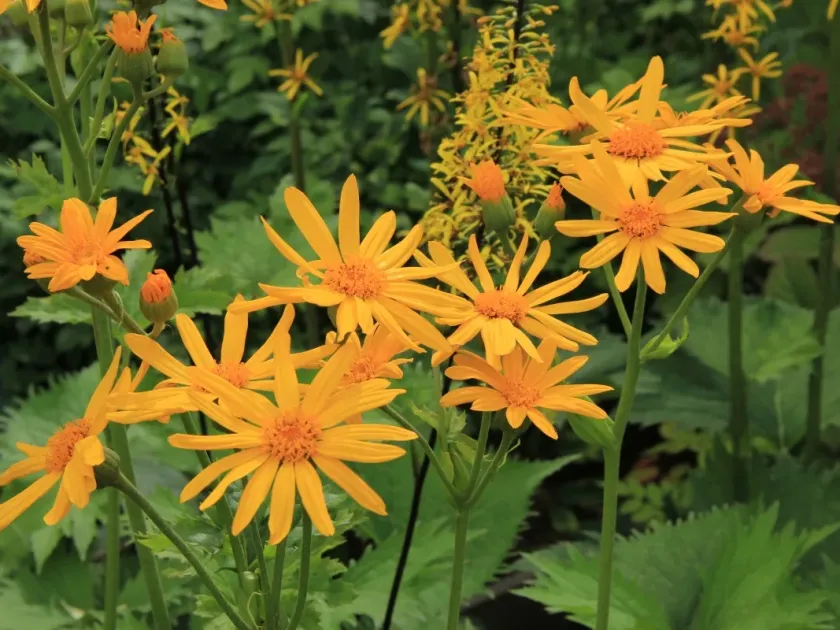
Hybrid Ligularia is a robust perennial herb belonging to the Asteraceae family. It is widely cultivated for its dramatic, large foliage and tall, candle-like spikes of bright yellow or orange flowers.
The primary method of propagation is by division of established clumps. This is best performed in early spring or autumn to ensure the plants have enough time to re-establish their root systems.
While seed propagation is possible, it requires cold stratification to break seed dormancy. Seeds should be sown in a cold frame or outdoors in late autumn for spring germination.
When spacing these plants, gardeners should account for their mature size, which often reaches one meter or more in width, requiring ample space for full growth.
The root system is vigorous and fleshy, so planting sites must be prepared deeply with rich organic amendments to support long-term development of the plant.
Growing requirements
Ligularia hybrids are renowned for their high moisture requirements. They perform best in consistently damp soils and are ideally suited for bog gardens or the margins of ponds.
Shade or partial shade is the preferred environment for this species. Intense mid-day sun will quickly cause the large leaves to wilt, even if the soil is adequately moist.
Fertile, humus-rich soil is essential for health. The soil should be capable of retaining moisture while still having enough structure to prevent compaction or waterlogging that could lead to rot.
Climatic adaptability is quite high, though the plants should be protected from drying winds, which can cause significant mechanical damage to the broad leaf surfaces.
During the dormant winter season, the plant is generally hardy, but a light layer of mulch can help protect the crown from extreme freeze-thaw cycles in colder climates.
Main diseases and pests
Slugs and snails are the most significant pests for Hybrid Ligularia. They are particularly attracted to the large, succulent foliage and can cause severe aesthetic damage if left unchecked.
Integrated pest management strategies, such as physical barriers or biological controls, are highly recommended to keep these mollusk populations at manageable levels.
Fungal diseases, including powdery mildew, can occur if the plants are placed in areas with poor air circulation or if the foliage remains wet for extended periods in humid conditions.
To mitigate disease risks, ensure proper spacing between individual plants to promote airflow and avoid overhead watering that keeps the leaves damp.
In cases of severe infection, appropriate fungicides should be applied, but focus primarily on cultural practices like sanitation and proper placement for long-term health.